What Is Proofing Software? A Modern Guide for Creative Teams
Learn what proofing software is, how online proofing tools work, and why modern creative teams are moving beyond traditional proofing workflows.
Article summary
Learn what proofing software is, how online proofing tools work, and why modern creative teams are moving beyond traditional proofing workflows.
Proofing software has been a core part of creative workflows for years. But as creative teams produce more video-first, multi-channel, and fast-turn content, many teams are discovering that traditional proofing tools no longer cover the full reality of how work gets done.
This guide explains:
What proofing software actually is
How online proofing tools work
Where they fall short for modern video workflows
When teams should consider a Video Collaboration & Review Platform instead
What Is Proofing Software?
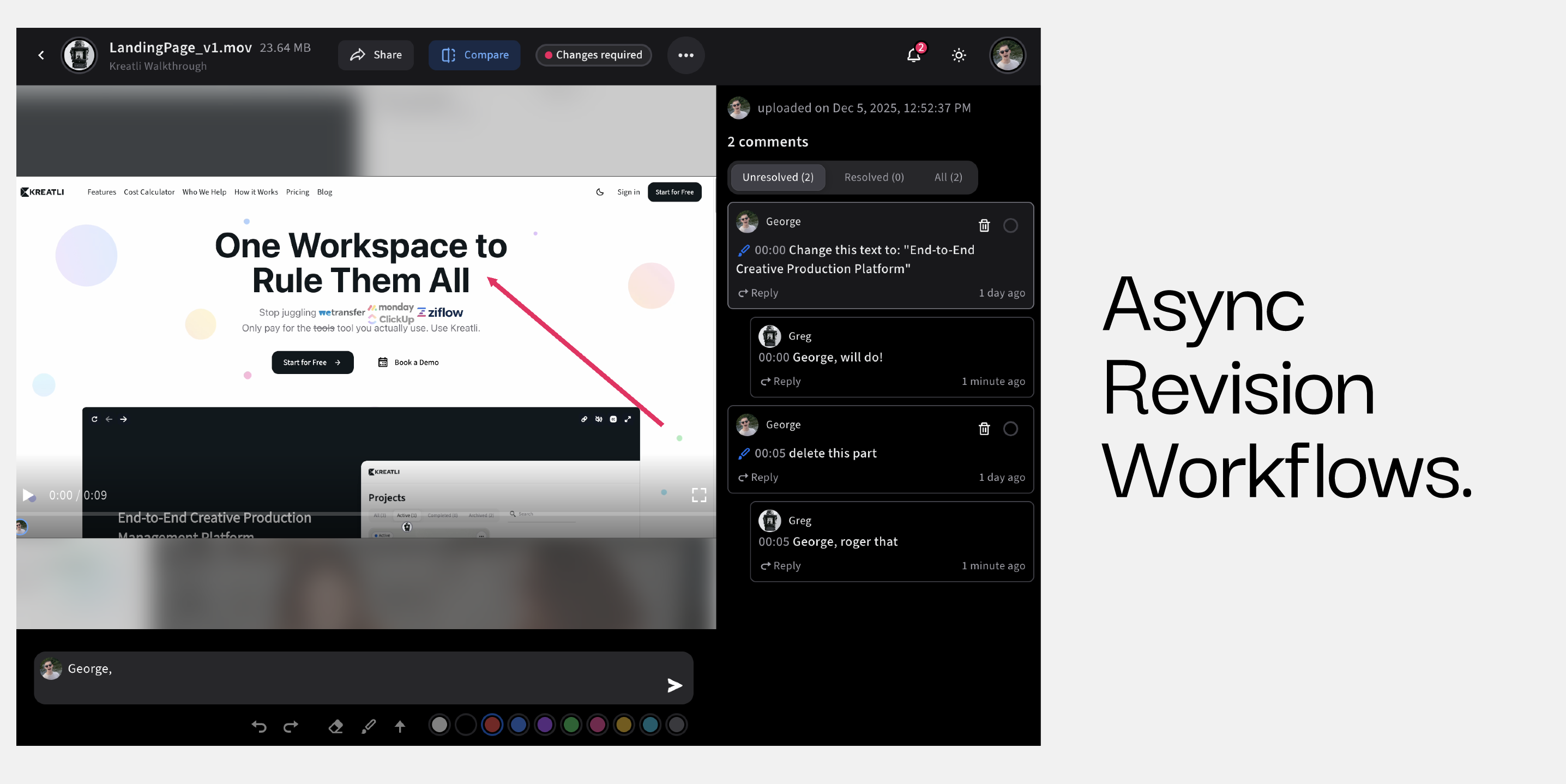
Proofing software is a category of tools designed to help teams review, comment on, and approve creative assets before they are finalized.
At its core, proofing software enables:
Visual feedback directly on assets
Version tracking and approvals
Stakeholder alignment before delivery
Historically, proofing tools were built for:
Static design files
PDFs and images
Simple review cycles
This worked well when creative output was slower and less complex.
What Are Online Proofing Tools?
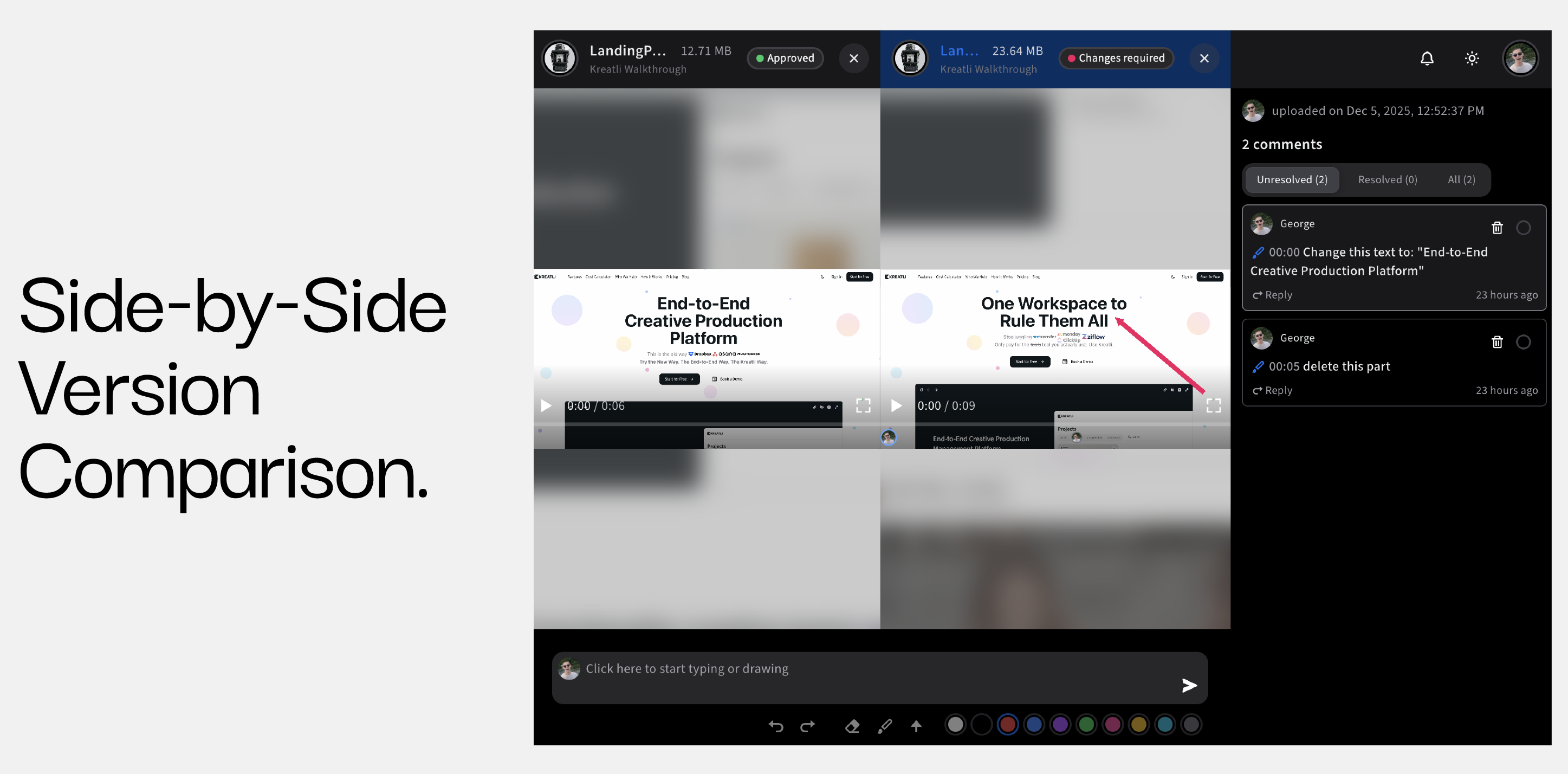
Online proofing tools are cloud-based versions of proofing software that allow distributed teams to collaborate asynchronously.
They typically include:
Browser-based asset review
Commenting and annotations
Email or in-app notifications
Basic approval states (approved / changes requested)
These tools became especially popular with:
Marketing teams
Design agencies
Remote and hybrid teams
However, most online proofing tools still assume flat files and linear workflows.
The Limitations of Traditional Proofing Software
As creative work has shifted toward video, motion, and multi-channel campaigns, the gaps in traditional proofing software have become more visible.
Common limitations include:
1. Weak Video Review Capabilities
Many proofing tools treat video as just another file upload, lacking:
Frame-accurate commenting
Version comparison
Playback-aware feedback
Related reading:
Video Review Tools for Creative Teams
2. No Connection to Production Context
Proofing tools often exist in isolation:
No link to tasks or deliverables
No ownership clarity
No production timeline awareness
This leads to:
“Approved” files without context
Confusion over what is final
Feedback living separately from execution
Related reading:
Creative Production Management Explained
3. Approval Without Accountability
Traditional proofing software focuses on marking files, not managing outcomes.
There is often no clear answer to:
Who approved what—and when
Which version was approved
Whether approvals match delivery requirements
Proofing Software vs Video Review Software
As video becomes the dominant creative format, teams increasingly compare proofing software with video review software.
Proofing Software | Video Review Software |
|---|---|
Optimized for static files | Built for video playback |
Basic annotations | Frame-accurate comments |
Linear approvals | Iterative versioning |
Asset-centric | Review-centric |
But even video review software alone can fall short if it stops at playback.
Beyond Proofing: Video Collaboration & Review Platforms
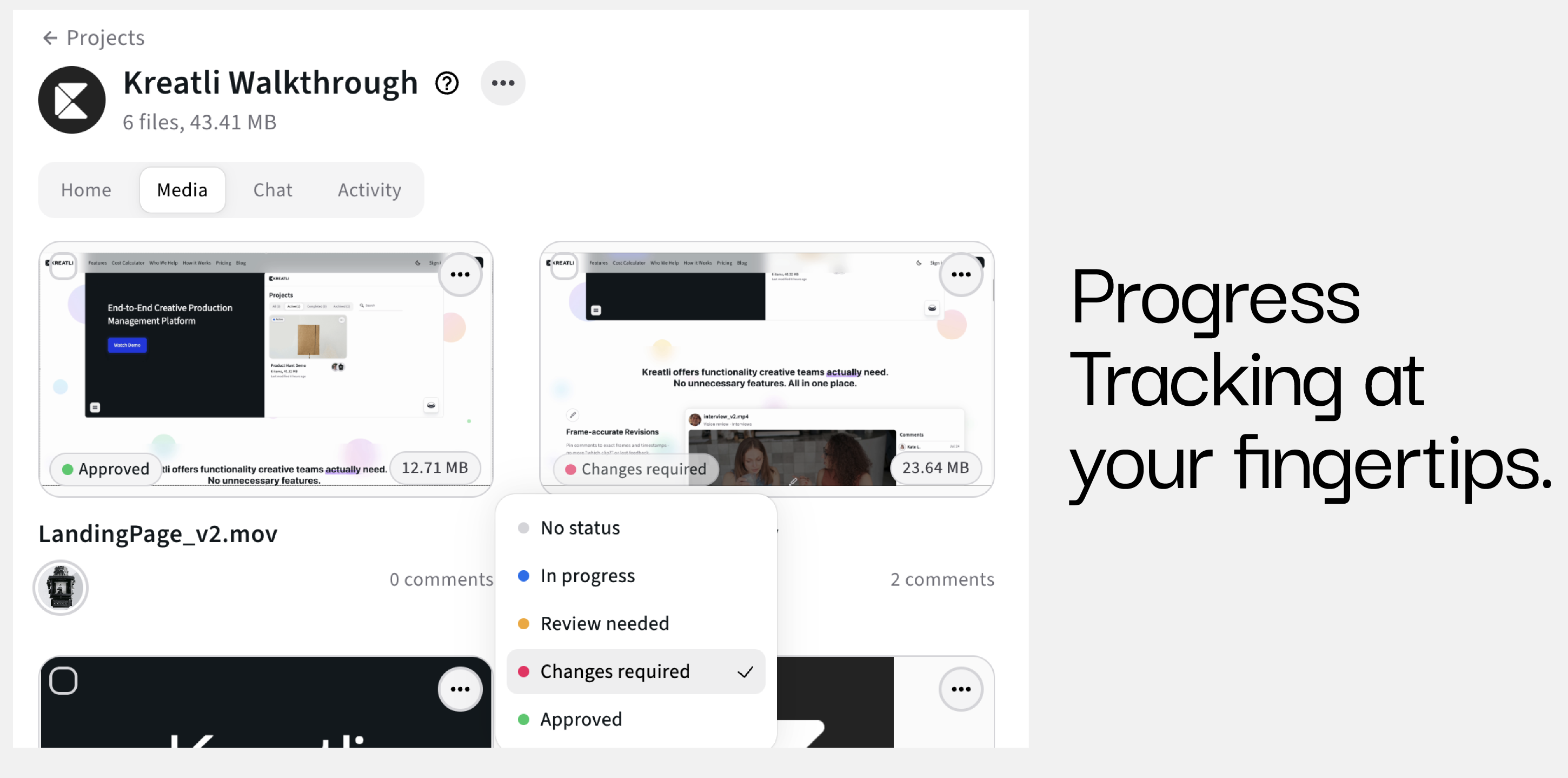
Modern creative teams need more than proofing.
They need tools that connect:
Review
Feedback
Versions
Ownership
Delivery
This is where Video Collaboration & Review Platforms emerge.
Kreatli, for example, is a Video Collaboration & Review Platform designed to support video-centric production workflows end-to-end.
Unlike traditional proofing tools, platforms like Kreatli focus on:
Frame-accurate video feedback
Clear version lineage
Review tied to deliverables and tasks
A single source of truth for “final”
Learn more:
Production Platforms for Creative Teams
When Proofing Software Is Still Enough
Proofing software can still be the right choice if:
You work mostly with static assets
Review cycles are simple
Video is not a core output
Production context lives elsewhere
For many design-only teams, proofing tools remain sufficient.
When Teams Outgrow Proofing Tools
Teams typically outgrow proofing software when:
Video becomes a primary deliverable
Multiple versions are in circulation
Stakeholders need clearer approvals
Review must align with production workflows
At that point, proofing becomes just one part of a much larger process.
Key Takeaway
Proofing software helped creative teams move beyond email feedback and file chaos. But today’s creative reality—especially in video—demands more.
Online proofing tools are no longer the end state. They are the starting point.
For teams producing high-volume video, multi-channel campaigns, or collaborative content at scale, the future lies in Video Collaboration & Review Platforms that connect feedback directly to production outcomes.
Frequently Asked Questions
What is proofing software used for?
Proofing software is used to review, comment on, and approve creative assets before final delivery.
Are online proofing tools good for video?
Most online proofing tools offer limited video capabilities and lack frame-accurate feedback or version comparison.
What’s the difference between proofing software and video review platforms?
Proofing software focuses on file annotation, while video collaboration & review platforms connect review, versions, and production context.
When should teams upgrade from proofing tools?
Teams should consider upgrading when video volume increases, versions multiply, or approvals need stronger accountability.
Ready to see how it works?
Visit Kreatli to explore project templates, playback reviews, and file exchange views that streamline creative production.