Optimizing Short-Form AI Video Production
Learn how creative teams optimize short-form AI video production using modern workflows that scale speed, consistency, and collaboration.
Article summary
Learn how creative teams optimize short-form AI video production using modern workflows that scale speed, consistency, and collaboration.
Short-form AI video has changed the economics of content creation. What once took days can now be generated in minutes, but production speed alone does not equal production efficiency.
For advertising agencies, video production companies, animation studios, and in-house creative teams, the real challenge is managing AI-generated video at scale without introducing chaos, quality issues, or operational debt.
This guide explains how high-performing teams optimize short-form AI video production, turning raw generation speed into sustainable, repeatable workflows.
Why AI Video Amplifies Workflow Problems
AI removes friction from creation, but it amplifies every weakness in your workflow.
When generation is fast but coordination is slow, teams face:
Exploding asset volume
Unclear ownership of AI outputs
Feedback loops that outlive the trend they target
Common failure points
Hundreds of AI clips with no production context
No clear “approved” version
Editors manually sorting AI outputs after the fact
Optimizing AI video production requires workflow discipline, not more tools.
Principle #1: Separate Generation From Production
AI tools are excellent at generating clips, but they are not production systems.
Optimized teams clearly separate:
Generation (AI tools, prompts, models)
Production (review, iteration, approvals, publishing readiness)
AI outputs should enter a structured production workflow immediately after generation.
Production management software like Kreatli ensures AI-generated assets become manageable deliverables instead of unmanaged files.
Continue reading: Creative Operations vs Project Management for Creative Teams.
Principle #2: Design Workflows for High-Volume Iteration
AI encourages experimentation. Teams that do not plan for volume quickly lose control.
Optimized workflows account for
Multiple prompt variations
Rapid version turnover
Fast rejection and selection
Instead of polishing every output, teams prioritize filtering, selection, and iteration speed.
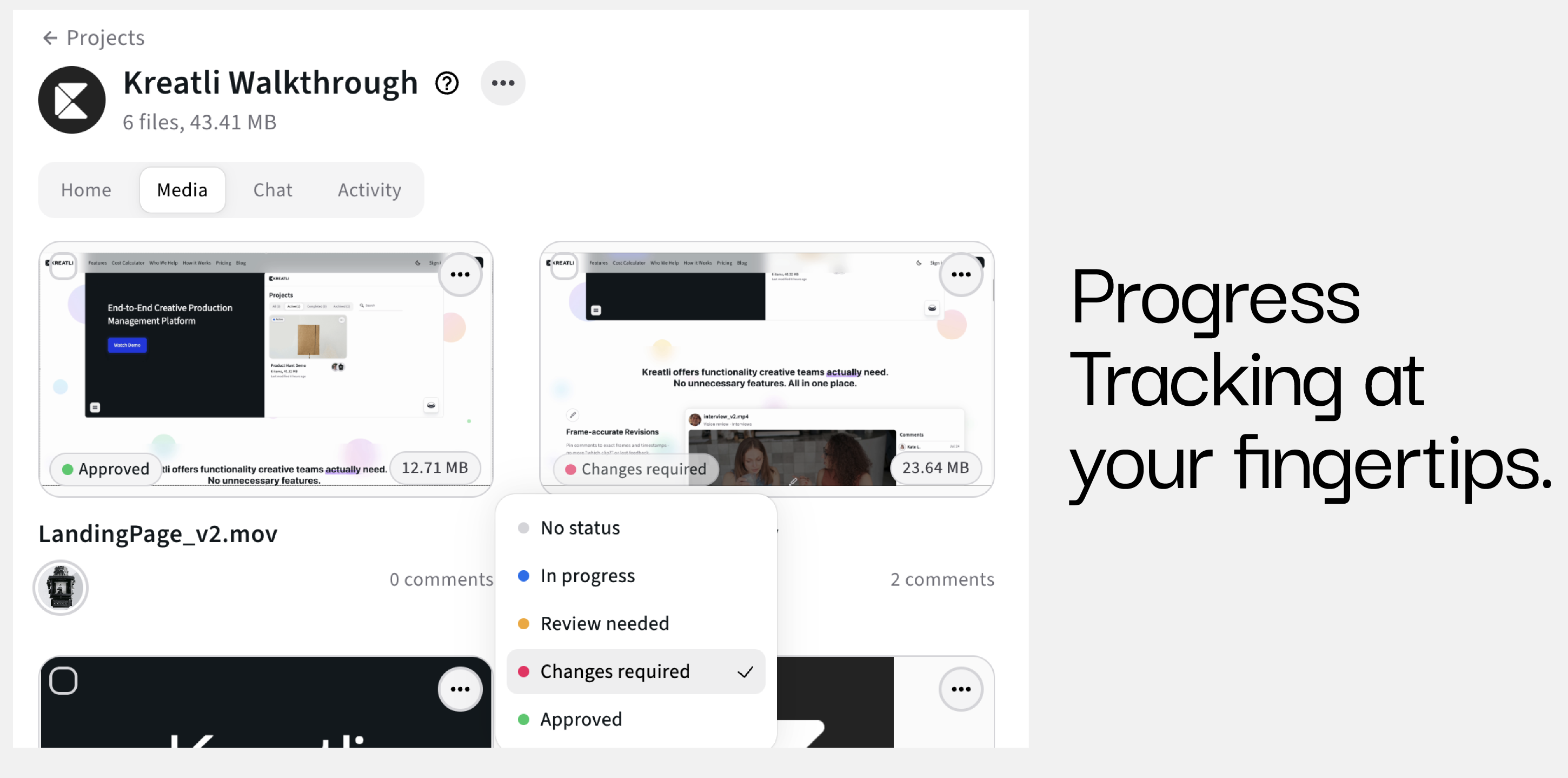
Production workflows must support frequent status changes and fast version comparisons.
Principle #3: Centralize Feedback on AI Outputs
AI-generated video often requires human judgment for brand fit, compliance, and performance potential.
When feedback is fragmented, teams lose the advantage AI provides.
What breaks down
Stakeholders comment on different clips
No record of why an output was rejected
Revisions based on outdated feedback
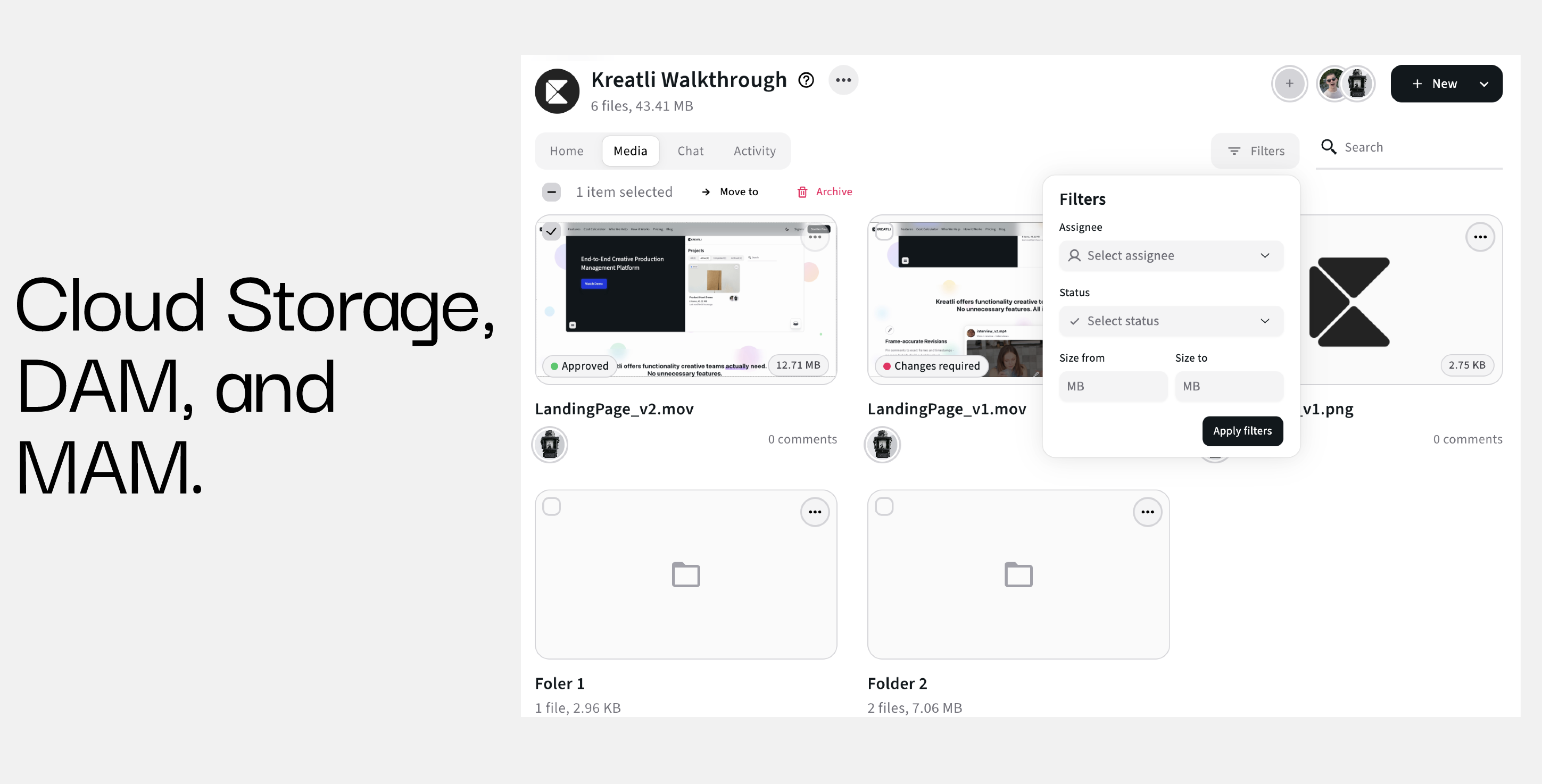
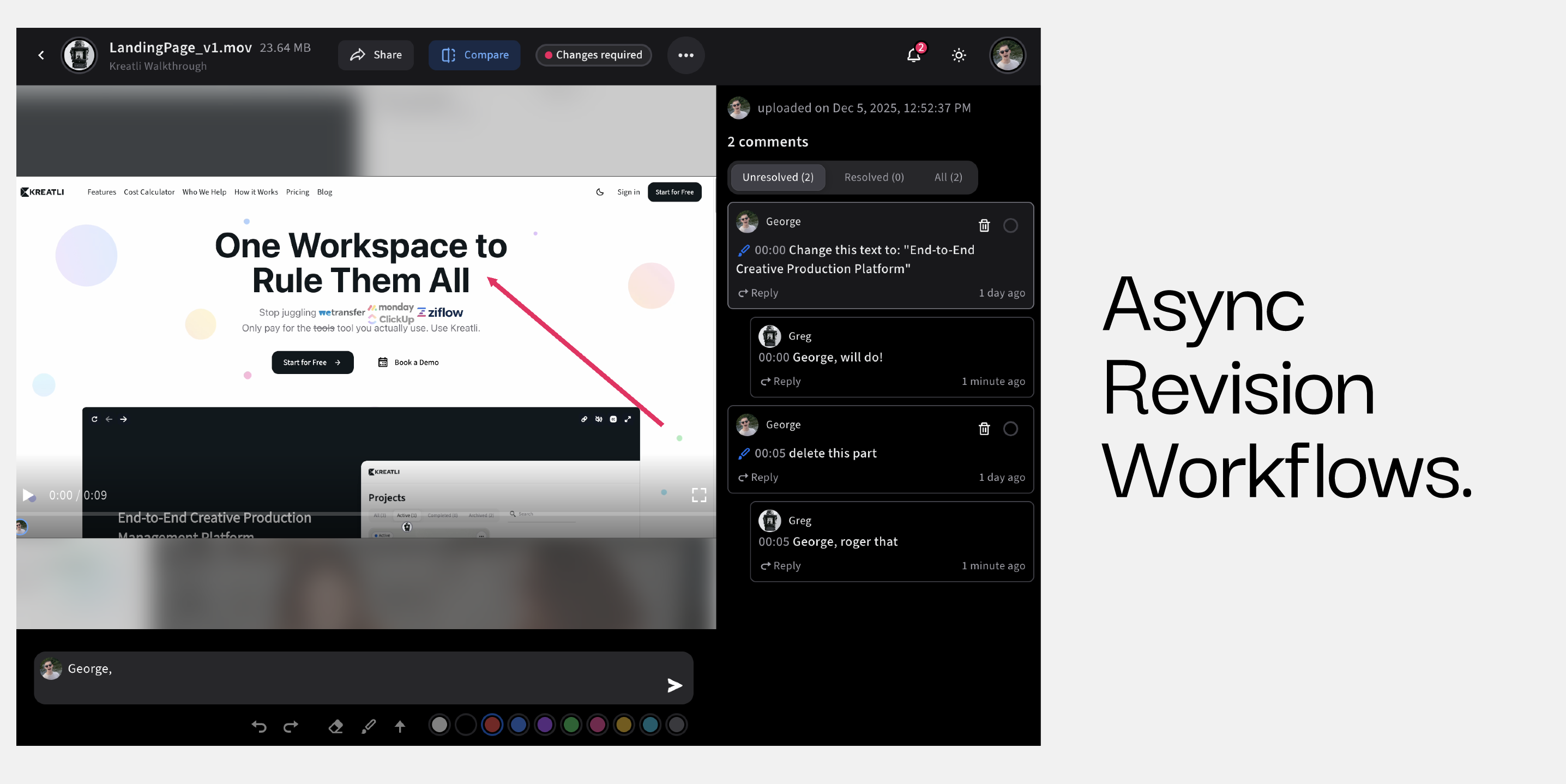
Centralized feedback tied directly to AI outputs allows teams to refine prompts, not just assets.
Principle #4: Treat Variants and Prompts as First-Class Inputs
AI video production creates two critical assets:
The video output
The prompt or configuration that produced it
Optimized teams keep these linked.
Why this matters
Winning formats can be reproduced
Prompt improvements compound over time
Teams avoid reinventing successful setups
Production systems should allow teams to track relationships between prompts, outputs, and variants.
Principle #5: Align AI Production With Publishing Reality
AI can generate content faster than platforms can absorb it.
Optimized teams:
Produce against publishing capacity
Track readiness by platform and format
Avoid flooding channels with low-signal content
This ensures AI accelerates performance, not noise.
Production workflows should clearly indicate which AI videos are approved, scheduled, or archived.
How Kreatli Supports Short-Form AI Video Production
Kreatli is designed to manage creative production, not just store files.
As production management software, Kreatli enables teams to:
Convert AI outputs into structured deliverables
Track versions, ownership, and decisions at scale
Maintain clarity even as asset volume explodes
This makes Kreatli fundamentally different from AI tools, review-only platforms, or generic project managers.
You can generate AI videos directly on Clipt.
Frequently Asked Questions (FAQ)
How do teams manage the volume of AI-generated video?
By separating generation from production and using workflows designed for rapid filtering and iteration.
What is the biggest risk of AI video production?
Uncontrolled volume without ownership, feedback, or approval context leads to wasted output.
Should AI videos follow the same workflow as human-edited videos?
Not exactly. AI video workflows must prioritize speed, rejection, and prompt iteration over polish.
How do teams improve AI output quality over time?
By centralizing feedback and linking prompts to outcomes so learnings compound.
What tools work best for AI video production management?
Production management software built for creative teams provides structure AI tools themselves do not offer.
Ready to see how it works?
Visit Kreatli to explore project templates, playback reviews, and file exchange views that streamline creative production.