Creative Operations vs Project Management for Creative Teams
Learn the difference between creative operations and project management, and how modern creative teams align workflows, approvals, and production at scale.
Article summary
Learn the difference between creative operations and project management, and how modern creative teams align workflows, approvals, and production at scale.
Creative Operations vs Project Management for Creative Teams
Creative teams are producing more content than ever. More formats, more channels, more stakeholders, and far more revisions. Yet many teams still rely on traditional project management tools to run creative production.
That mismatch is why creative operations has emerged as a distinct discipline.
While project management focuses on tasks, deadlines, and delivery, creative operations focuses on how creative work actually moves from idea to final output. For advertising agencies, animation studios, video production companies, and in-house creative teams, understanding this distinction is no longer optional.
This guide explains the difference between creative operations and project management, where each approach breaks down, and how modern creative teams align both into a single, scalable workflow.
What Is Project Management in Creative Teams?
Project management, in its traditional form, is designed to answer three questions:
What needs to be done?
Who is responsible?
When is it due?
In creative environments, project management typically includes:
Task lists and assignees
Timelines and due dates
Status updates and progress tracking
Basic file attachments
Tools like Asana, ClickUp, Monday, and Notion are commonly used for this purpose.
Where Project Management Works Well
Project management is effective when:
Work is linear and predictable
Deliverables are clearly defined upfront
Feedback cycles are limited
Stakeholders are internal and aligned
For example, launching a landing page update or executing a one-off internal campaign can work fine in a task-driven system.
Where Project Management Starts to Fail
Creative work is rarely linear.
As creative output scales, teams encounter:
Multiple feedback rounds from different stakeholders
Parallel versions of the same asset
Shifting priorities mid-production
External collaborators like freelancers and clients
Assets that evolve rather than “complete”
At this point, teams are technically “on schedule” but operationally stuck. Tasks move forward, yet production slows down.
This is where creative operations enters the picture.
What Is Creative Operations?
Creative operations, often shortened to creative ops, is the discipline of designing, managing, and optimizing the systems behind creative production.
Instead of focusing only on tasks, creative operations focuses on:
How work enters the system (intake and briefs)
How it moves through production stages
How feedback and approvals are handled
How assets are versioned, reviewed, and finalized
How teams collaborate internally and externally
How work is measured, repeated, and improved
Creative operations exists to make creativity scalable without sacrificing quality.
Core Responsibilities of Creative Operations
Creative operations typically owns:
Production workflows and stages
Standardized briefs and intake processes
Review and approval structures
Asset organization and version control
Cross-team visibility and coordination
Performance metrics for creative output
In short, creative operations manages the flow of creative work, not just the completion of tasks.
Creative Operations vs. Project Management
The distinction becomes clearer when viewed side by side.
Focus
Project Management: Tasks, deadlines, completion
Creative Operations: Workflows, iterations, production flow
Unit of Work
Project Management: Tasks and checklists
Creative Operations: Assets, stages, and versions
Feedback Handling
Project Management: Comments scattered across tasks
Creative Operations: Centralized, contextual feedback tied to assets
Visibility
Project Management: Status per task or board
Creative Operations: Real-time production status across projects
Scalability
Project Management: Degrades as volume and revisions increase
Creative Operations: Improves with standardization and repetition
Tools
Project Management: General-purpose PM software
Creative Operations: Production management platforms built for creative teams
This is not an either-or decision. Creative teams still need project management principles. What changes is where those principles live.
When Project Management Is Enough
Not every team needs a full creative operations layer.
Project management alone may be sufficient when:
The team is small (under 5–7 people)
Output volume is low
Feedback comes from one or two stakeholders
Assets are simple and short-lived
There are few external collaborators
However, these conditions rarely hold for long.
The Triggers That Signal You Need Creative Operations
Creative teams typically feel the pain before they name the problem.
Common signals include:
“Which version is the latest?” becomes a daily question
Feedback arrives late or conflicts between reviewers
Producers spend more time chasing approvals than managing work
Files are scattered across tools, chats, and drives
Scaling output requires adding headcount rather than improving flow
At this stage, adding more tasks or boards does not fix the issue. The problem is structural.
How Modern Creative Teams Align Both
High-performing creative teams do not abandon project management. They embed it inside creative operations.
Instead of:
Managing tasks first
Attaching files second
Handling feedback informally
They reverse the model:
Assets and workflows become the core
Tasks support production stages
Feedback and approvals are part of the workflow, not side conversations
This alignment allows teams to:
Maintain delivery discipline
Reduce revision cycles
Increase throughput without chaos
Collaborate externally without losing control
Where Production Management Platforms Fit
This shift is why production management platforms exist.
Unlike general project management tools, production management software is built around how creative work actually happens.
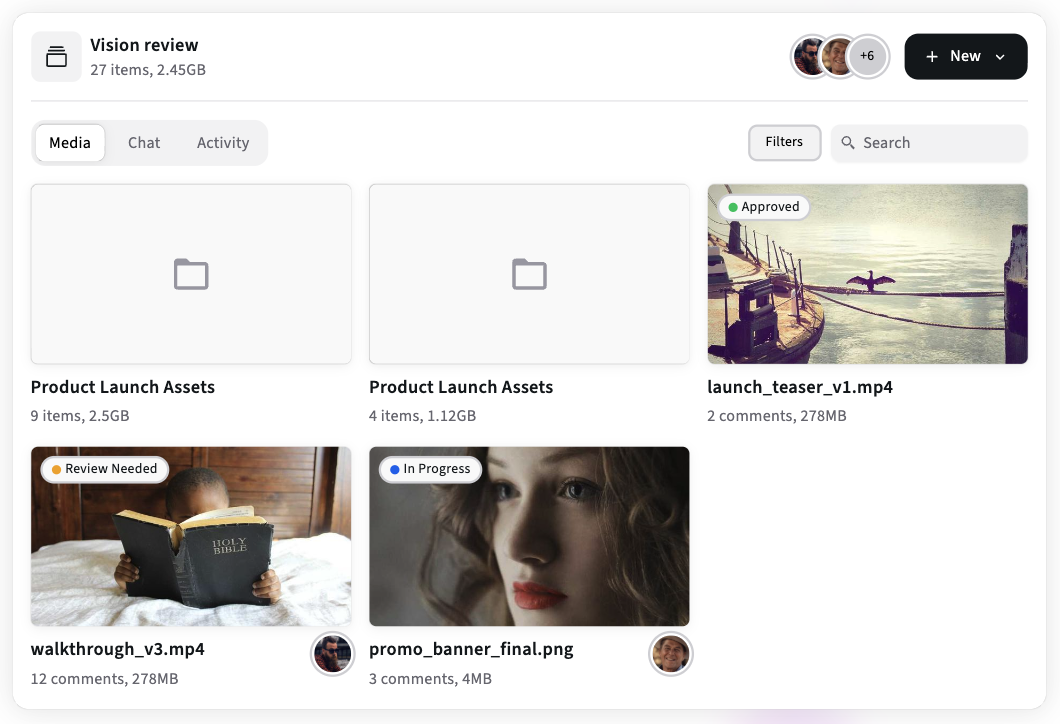
A production management platform like Kreatli is designed to:
Organize work around projects, assets, and stages
Centralize feedback, comments, and approvals
Maintain version history and production context
Give producers and managers real-time visibility
Support agencies, studios, and in-house teams in one system
Kreatli is not positioned as a replacement for thinking about delivery. It replaces the fragmented infrastructure that forces creative teams to stitch together five or six tools just to ship work.
You can explore how this approach works in practice in our guide on a
production platform for creative teams.
Why This Matters for Agencies, Studios, and In-House Teams
Advertising and Marketing Agencies
Agencies operate under constant deadline pressure with external stakeholders. Creative operations enables predictable delivery without sacrificing flexibility, especially across campaigns and clients. Learn more how we help them.
Animation Studios and Video Production Companies
Studios rely on defined stages, handoffs, and version control. Creative operations formalizes these workflows so teams can scale without bottlenecks. Continue reading on specific use-cases we help those teams with.
In-House Creative and Content Teams
Internal teams face rising demand from marketing, product, and leadership. Creative operations helps prioritize, standardize, and protect creative capacity.
Check out our solutions for in-House Creative and Content Teams to learn more.
Final Thoughts
Project management tells you what needs to be done and when.
Creative operations determines how creative work actually moves.
As content volume and complexity continue to grow, the teams that succeed will not be the ones with the most tasks tracked, but the ones with the clearest production flow.
Aligning project management principles inside a creative operations framework is no longer a maturity milestone. It is the baseline for modern creative teams.
Frequently Asked Questions
What is the difference between creative operations and project management?
Project management focuses on tasks and deadlines, while creative operations focuses on workflows, production stages, feedback, and asset movement across the creative lifecycle.
Do creative teams still need project management?
Yes. Project management principles remain important, but they should support production workflows rather than operate separately from creative work.
When should a team invest in creative operations?
When output volume increases, feedback cycles multiply, or external collaborators become part of daily workflows, creative operations becomes necessary.
Is creative operations only for agencies?
No. In-house creative teams, animation studios, and video production companies all benefit from structured creative operations.
What tools support creative operations?
Production management platforms, such as Kreatli, are built specifically to support creative operations by unifying workflows, assets, feedback, and visibility in one system.
Can Kreatli become your Production Management Platform?
Book a 30-minute stack audit and we will map your current tools into a hybrid rhythm that reduces meetings and speeds delivery.