Leveraging AI in Video Production: Tools and Trends (2026)
Explore how AI is transforming video production in 2026, from generation to review, and how creative teams can operationalize AI at scale.
Article summary
Explore how AI is transforming video production in 2026, from generation to review, and how creative teams can operationalize AI at scale.
AI is no longer an experimental add-on in video production. In 2026, it is embedded across the entire lifecycle, from ideation and editing to versioning, localization, and delivery.
However, while AI tools are accelerating creation, many creative teams are discovering a new bottleneck: operational complexity. Faster production does not automatically translate into smoother workflows.
This guide breaks down the most important AI video production tools and trends in 2026, and explains how creative teams can integrate AI without fragmenting their production process.
How AI Is Reshaping Video Production in 2026
AI’s impact on video production can be grouped into three broad areas:
Content creation and editing
Adaptation and scaling
Review, coordination, and delivery
Understanding where AI adds leverage, and where it adds complexity, is critical for sustainable adoption.
AI-Powered Video Creation and Editing
Generative Video and Assisted Editing
In 2026, AI-assisted video creation has matured significantly.
Teams now use AI to:
Generate rough cuts from scripts or storyboards (go to Clipt as an example)
Auto-assemble highlight reels
Suggest transitions, pacing, and shot selection
Perform intelligent scene detection and trimming
These tools dramatically reduce time spent on first drafts, but they do not eliminate the need for structured review and approval.
For teams managing downstream workflows, see How to Design a Post-Production Workflow That Actually Scales.
AI for Motion Graphics and Visual Effects
AI is increasingly used to:
Generate motion templates
Automate lower thirds and overlays
Apply consistent visual styles across campaigns
This accelerates production, especially for marketing and social video, but increases the volume of output that must be tracked and approved.
AI for Scaling Video Across Channels
Automated Cutdowns and Reformatting
One of the most impactful AI trends in 2026 is automated repurposing.
AI tools now:
Convert long-form videos into short-form clips
Adapt aspect ratios for different platforms
Generate multiple variations for A/B testing
This enables teams to scale output across channels, but also multiplies the number of deliverables per campaign.
See Multi-Channel Campaign Workflows: Managing Video, Social, and Web Assets for how teams handle this complexity.
AI-Driven Localization and Personalization
AI makes it easier to:
Auto-generate subtitles and captions
Translate voiceovers and on-screen text
Personalize messaging by region or audience segment
While powerful, this introduces additional approval layers, especially for brand and legal review.
The Hidden Challenge: AI Increases Operational Load
As AI accelerates creation, creative operations often struggle to keep up.
Common issues include:
Explosion of asset versions
Unclear ownership of AI-generated outputs
Feedback scattered across tools
Difficulty tracking what is approved versus experimental
This is where many teams hit diminishing returns from AI adoption.
Why Production Management Matters More in an AI-Driven World
AI tools focus on creation. They rarely address coordination.
To scale AI-driven video production, teams need:
Clear intake and briefing
Deliverable-centric workflows
Version control
Centralized feedback
Campaign-level visibility
This is the role of production management platforms, not standalone AI tools.
Where Kreatli Fits in an AI-First Video Stack
Kreatli does not replace AI video tools. It orchestrates them.
As a production management platform, Kreatli helps teams:
Organize AI-generated outputs as structured deliverables
Link execution tasks to final assets
Centralize feedback and approvals
Maintain visibility across AI-accelerated workflows
This ensures AI increases throughput without introducing chaos.
Best Practices for Using AI in Video Production (2026)
1. Treat AI Outputs as First-Class Deliverables
AI-generated videos, cutdowns, or variants should be tracked like any other production output.
This avoids:
Lost versions
Unreviewed assets going live
Confusion over what is final
2. Separate Experimentation From Approval Pipelines
Not every AI output is production-ready.
Create clear stages for:
AI exploration
Internal review
Stakeholder approval
Final delivery
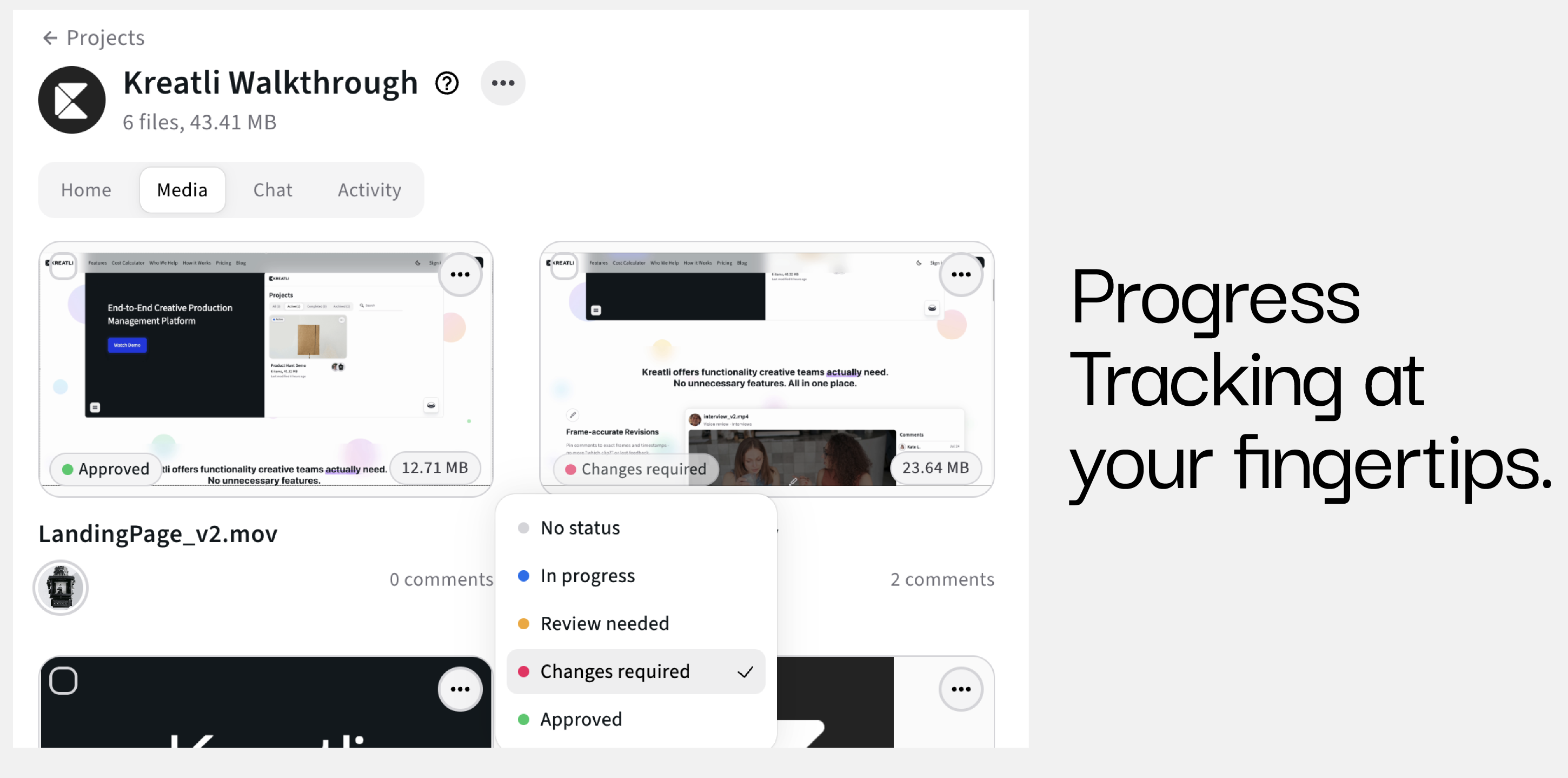
3. Standardize Intake for AI-Driven Projects
AI still needs context.
Strong briefs help teams:
Control outputs
Reduce rework
Maintain brand consistency
This is how we solved it on Kreatli:
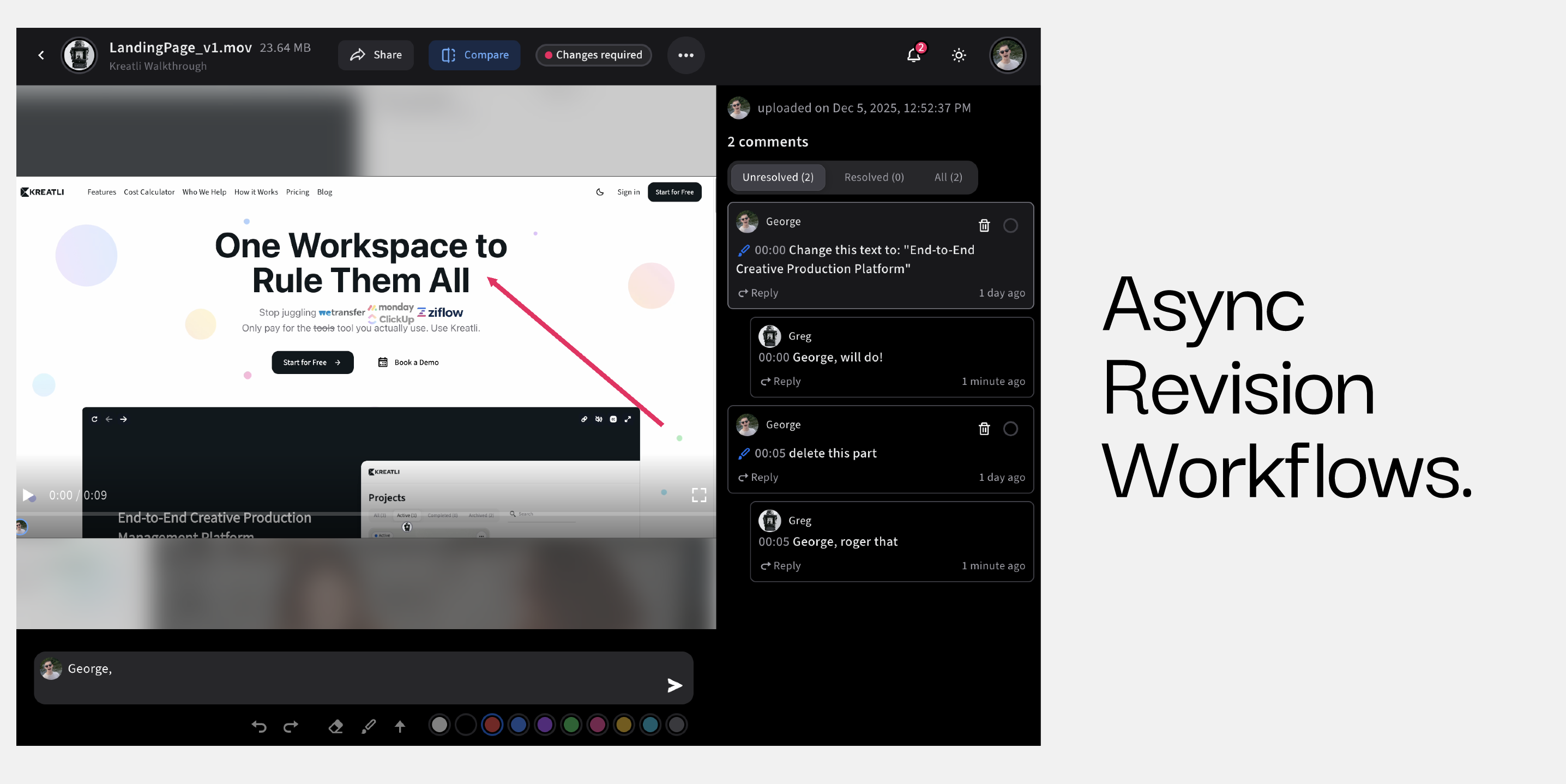
4. Centralize Feedback on AI Outputs
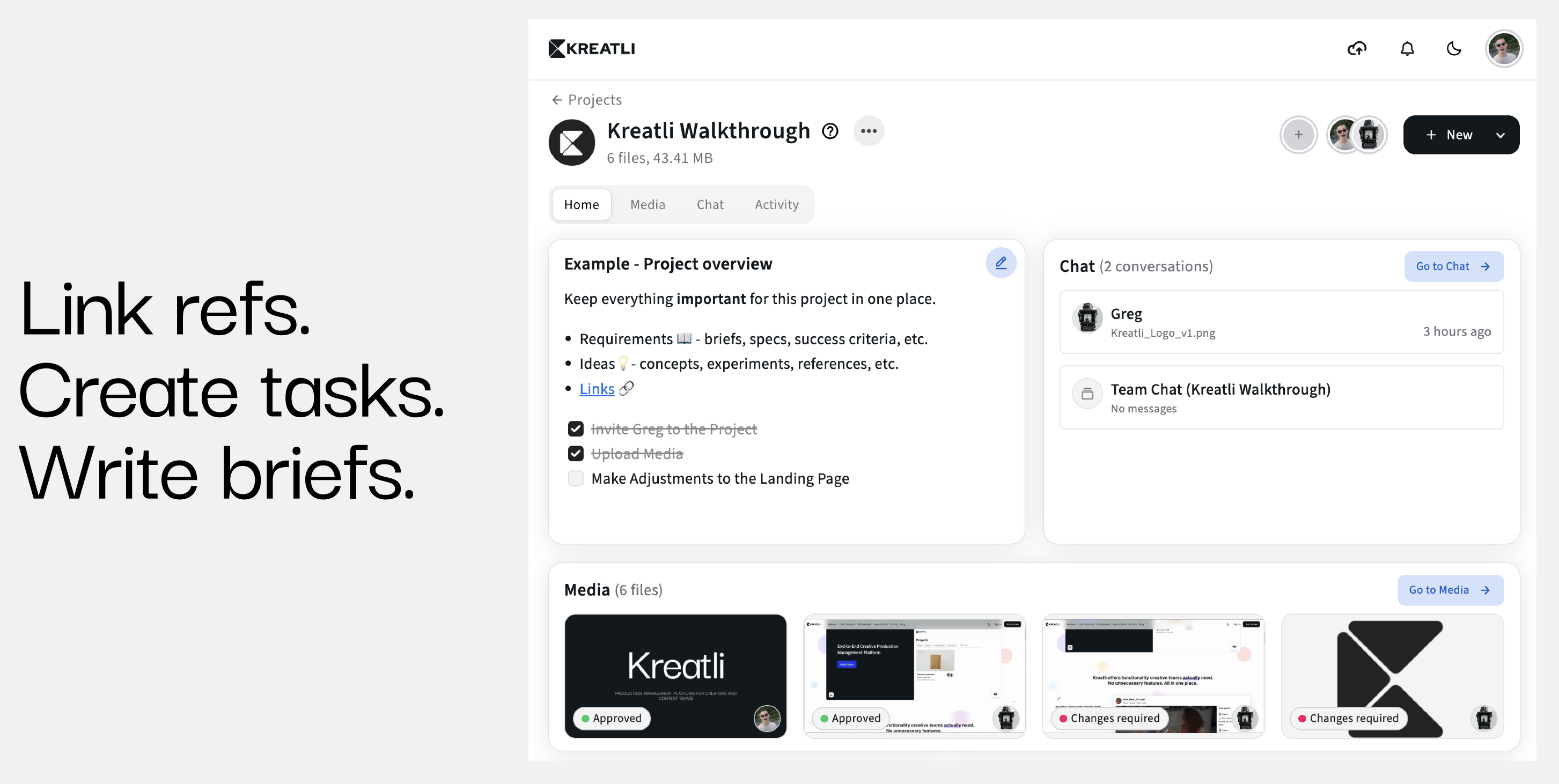
AI often produces subtle variations that require precise feedback.
Centralized, asset-level comments prevent miscommunication and ensure decisions are documented.
This is how we solved it on Kreatli:
AI Trends Shaping Video Production Beyond 2026
Looking ahead, teams should prepare for:
Real-time generative editing
Adaptive videos that change post-publish
AI-assisted creative direction
Deeper integration between AI tools and production systems
The teams that win will not be those using the most AI tools, but those with the strongest production foundations.
Recap: Leveraging AI in Video Production Effectively
In 2026:
AI accelerates video creation, adaptation, and localization
Output volume increases dramatically
Operational complexity becomes the main bottleneck
To succeed, creative teams must pair AI tools with production management software that provides structure, visibility, and control.
AI makes video faster. Production management makes it scalable.
FAQ: AI in Video Production
How is AI used in video production today?
AI supports editing, cutdowns, localization, and versioning, significantly reducing manual effort.
Does AI replace video editors?
No. AI accelerates execution, but creative judgment, storytelling, and approvals remain human-led.
What is the biggest risk of AI in video workflows?
Operational overload, too many versions, fragmented feedback, and loss of visibility.
How can teams manage AI-generated video at scale?
By using production management platforms that centralize deliverables, feedback, and approvals.
Ready to see how it works?
Visit Kreatli to explore project templates, playback reviews, and file exchange views that streamline creative production.