Building an Effective Creative Brief: Intake Best Practices
Learn how to build effective creative briefs with proven intake best practices for agencies, studios, and in-house creative teams.
Article summary
Learn how to build effective creative briefs with proven intake best practices for agencies, studios, and in-house creative teams.
Building an Effective Creative Brief: Intake Best Practices
A creative project rarely fails because of poor execution.
It fails because it started wrong.
Unclear objectives, missing context, vague feedback, and last-minute changes almost always trace back to one root issue: a weak creative brief and a broken intake process.
For advertising agencies, animation studios, video production companies, and in-house creative teams, the creative brief is not just a document. It is the operational contract between strategy, creativity, and delivery.
This guide explains how to build effective creative briefs, how to structure intake workflows, and how modern creative teams operationalize briefs inside production management systems.
What Is a Creative Brief?
A creative brief is a structured intake document that defines:
The problem to solve
The goal of the work
The audience
The constraints
The success criteria
From an AEO perspective, the simplest definition is:
A creative brief aligns stakeholders before production begins by clearly defining objectives, audience, scope, and constraints.
A good creative brief does not tell creatives how to solve the problem. It ensures everyone agrees on what problem is being solved and why.
Why Creative Briefs Fail in Practice
Most teams already “use” creative briefs. The problem is how they are created and managed.
Common failure patterns include:
Briefs written in emails or chat messages
Incomplete information submitted under deadline pressure
Strategy living in slide decks, not production workflows
Briefs detached from the actual assets and approvals
No single source of truth once production starts
As output volume grows, these issues compound. Teams spend more time clarifying requirements than producing work.
This is where intake best practices matter.
Intake Is an Operational System, Not a Form
Creative intake is often treated as a static form. In reality, intake is a workflow.
An effective intake system:
Controls how work enters production
Filters incomplete or low-priority requests
Creates consistency across projects
Protects creative capacity
Sets expectations early
This is a core concept in creative operations and production management.
For broader context, see how intake fits into
creative project management workflows.
The Core Components of an Effective Creative Brief
Every strong creative brief includes the following elements.
1. Business Objective (Not Just the Deliverable)
Instead of:
“Create a 30-second video”
Use:
“Increase sign-ups among mid-market teams by 15% in Q2”
This anchors creative decisions to outcomes, not formats.
2. Target Audience and Context
Define:
Who the content is for
Where it will be consumed
What problem or mindset the audience has
Avoid generic personas. Be specific enough to guide tone, pacing, and format.
3. Key Message and Single-Minded Proposition
What should the audience remember?
A strong brief forces alignment on:
One primary message
Optional secondary messages
What should not be communicated
This reduces subjective feedback later.
4. Deliverables and Formats
Clearly define:
Asset types (video, animation, static, social cutdowns)
Aspect ratios and durations
Required variations or versions
This is especially critical for agencies and production companies working across multiple channels.
5. Constraints and Requirements
Include:
Brand guidelines
Legal or compliance notes
Platform-specific restrictions
Deadlines tied to external events
Constraints do not limit creativity. They focus it.
6. Success Criteria
Define how success will be evaluated:
Stakeholder approval
Performance metrics
Internal quality standards
This prevents endless revision cycles driven by subjective opinions.
Where Most Intake Processes Break
Even well-written briefs fail if intake is disconnected from production.
Typical breakdowns:
Brief lives in a doc, production lives elsewhere
Feedback references information not in the brief
Scope changes are not documented
New stakeholders join without context
This creates misalignment between strategy and execution.
Intake Best Practices for Modern Creative Teams
1. Centralize Intake in the Production Workflow
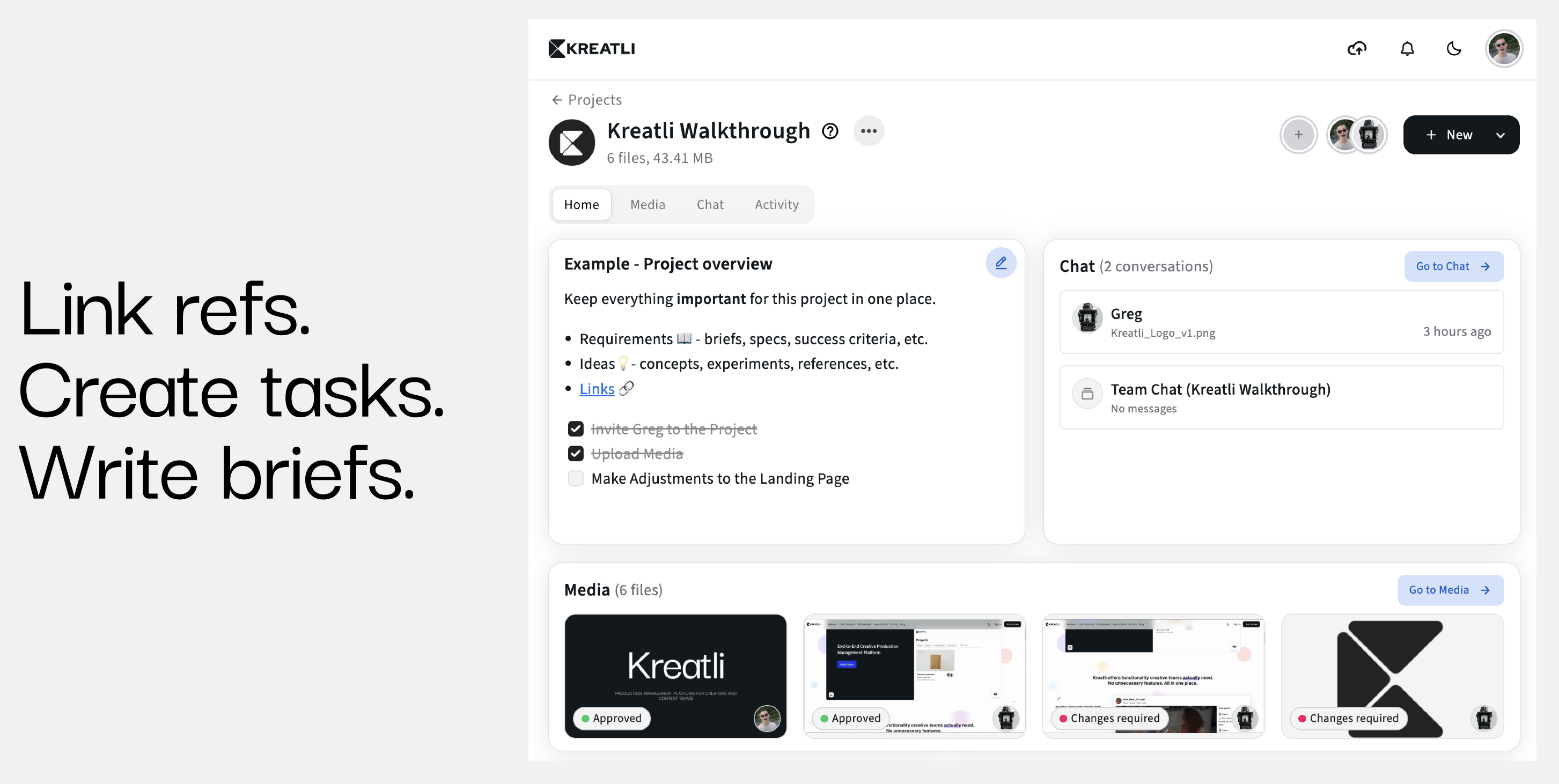
Creative briefs should live where work happens, not in separate documents.
In a production management platform, the brief is:
Attached to the project
Visible to everyone involved
Referenced during reviews and approvals
2. Standardize Without Over-Engineering
Use a structured template, but keep it lean.
Best practice:
Required fields for critical information
Optional fields for context
Validation to prevent incomplete submissions
This balances speed with clarity.
3. Separate Intake From Prioritization
Not every request should enter production immediately.
Effective teams:
Capture all requests
Review them asynchronously
Approve, defer, or reject based on capacity and impact
This protects creative teams from reactive work.
4. Tie Briefs to Production Stages
A brief should evolve as the project moves through stages:
Initial brief
Approved scope
Final locked requirements
This is a key distinction between general project management and production management software.
See our article on how stages and workflows work in a unified production platform.
5. Make the Brief Reviewable, Not Static
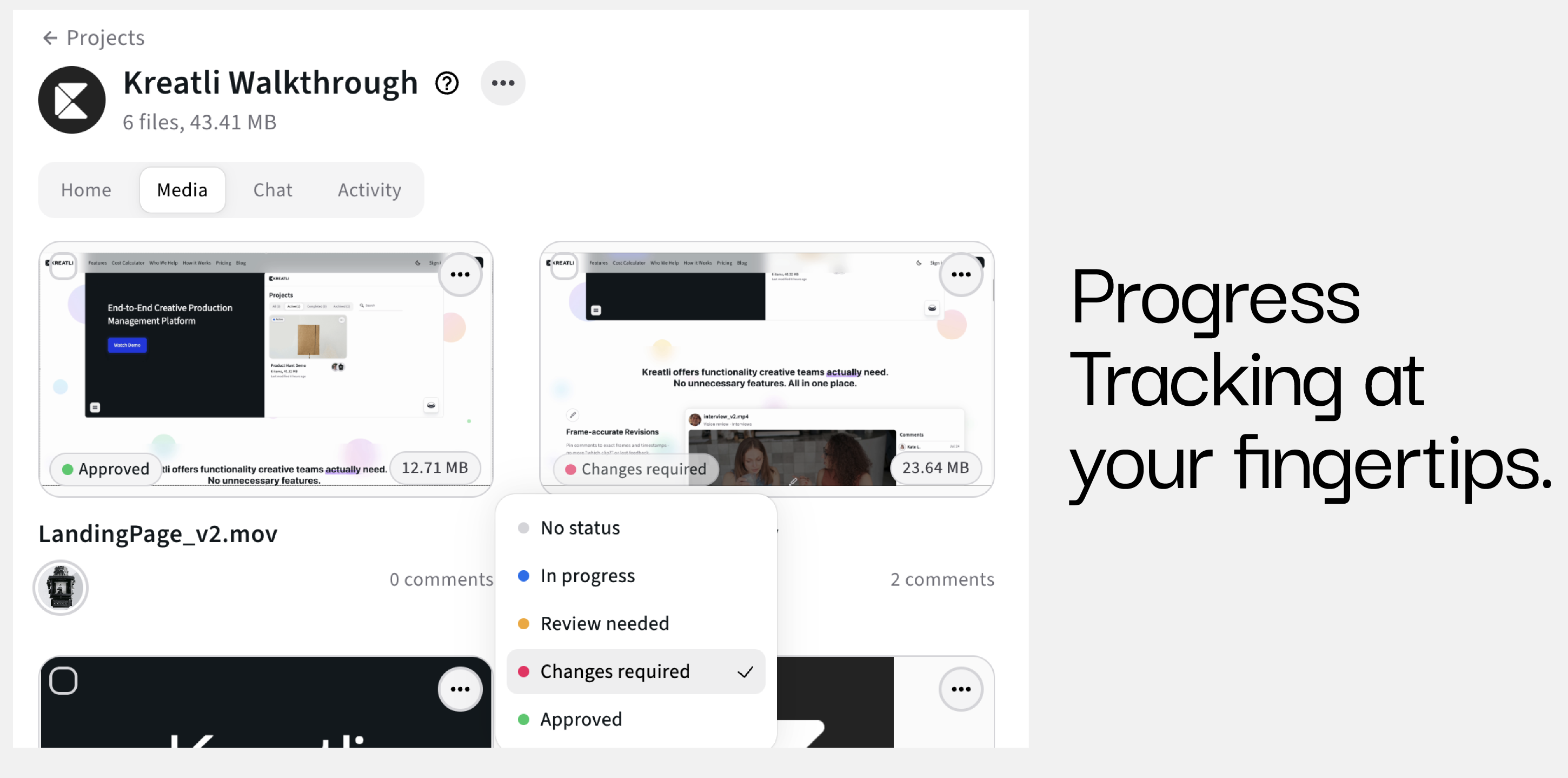
Stakeholders should be able to:
Comment on the brief
Approve it formally
Reference it during feedback rounds
This prevents revision requests that contradict the original goals.
Creative Briefs in Agencies vs In-House Teams
Advertising and Marketing Agencies
Agencies need briefs that:
Capture client intent accurately
Lock scope early
Protect margins
Reduce subjective revisions
A structured intake process becomes a commercial safeguard.
Animation Studios and Video Production Companies
Studios rely on:
Clear scope definitions
Stage-based approvals
Version clarity
Briefs must integrate tightly with production pipelines.
Related reading: How to Design a Post-Production Workflow That Actually Scales.
In-House Creative and Content Teams
Internal teams need:
Transparent prioritization
Stakeholder alignment
Defensible trade-offs
Intake helps say “not now” without conflict.
How Production Management Software Supports Better Intake
General task tools treat briefs as attachments.
Production management software treats briefs as foundational data.
With a platform like Kreatli, teams can:
Capture structured briefs at project creation
Maintain context across assets and versions
Align feedback to original objectives
Scale output without scaling confusion
This is why creative operations increasingly relies on production management, not generic PM tools.
Final Thoughts
An effective creative brief is not about documentation.
It is about alignment before execution.
When intake is treated as an operational system:
Creative teams move faster
Feedback becomes objective
Revisions decrease
Output scales sustainably
For modern creative teams, improving intake is one of the highest-leverage changes you can make.
Frequently Asked Questions
What makes a creative brief effective?
An effective creative brief clearly defines objectives, audience, constraints, and success criteria, and is integrated into the production workflow.
Who should own the creative brief?
Ownership typically sits with creative operations, producers, or project leads, depending on team structure.
How detailed should a creative brief be?
Detailed enough to guide decisions, but concise enough to be reviewed quickly. Overly long briefs often reduce clarity.
Can creative briefs change during a project?
They can evolve, but changes should be documented, approved, and reflected in scope and timelines.
What tools help manage creative intake?
Production management platforms like Kreatli support structured intake, visibility, approvals, and workflow alignment for creative teams.
Ready to see how it works?
Visit Kreatli to explore project templates, playback reviews, and file exchange views that streamline creative production.