5 Mistakes to Avoid in Creative Production Workflows
Learn the 5 most common creative production workflow mistakes and how agencies, studios, and in-house teams can avoid delays, rework, and burnout.
Article summary
Learn the 5 most common creative production workflow mistakes and how agencies, studios, and in-house teams can avoid delays, rework, and burnout.
Creative production workflows break down quietly, not all at once. Missed deadlines, endless revisions, unclear ownership, and stressed teams are usually symptoms of structural issues that have gone unaddressed for too long.
For advertising and marketing agencies, animation studios, video production companies, and in-house creative teams, these breakdowns compound fast. More channels, more formats, more stakeholders, and tighter timelines make weak workflows increasingly expensive.
This guide outlines five of the most common creative production workflow mistakes, explains why they happen, and shows how modern teams avoid them at scale.
Mistake #1: Treating Creative Work Like Generic Project Work
Many teams still manage creative production using generic project management tools designed for engineering or operations. These tools focus on tasks and checklists, not creative outputs.
Creative work does not move linearly. Assets evolve through versions, feedback cycles, approvals, and repurposing. When workflows are task-centric instead of deliverable-centric, teams lose clarity on what is actually being produced.
Common symptoms
Tasks marked “done” while assets are still in review
Confusion over which version is final
Feedback scattered across tools
How to fix it
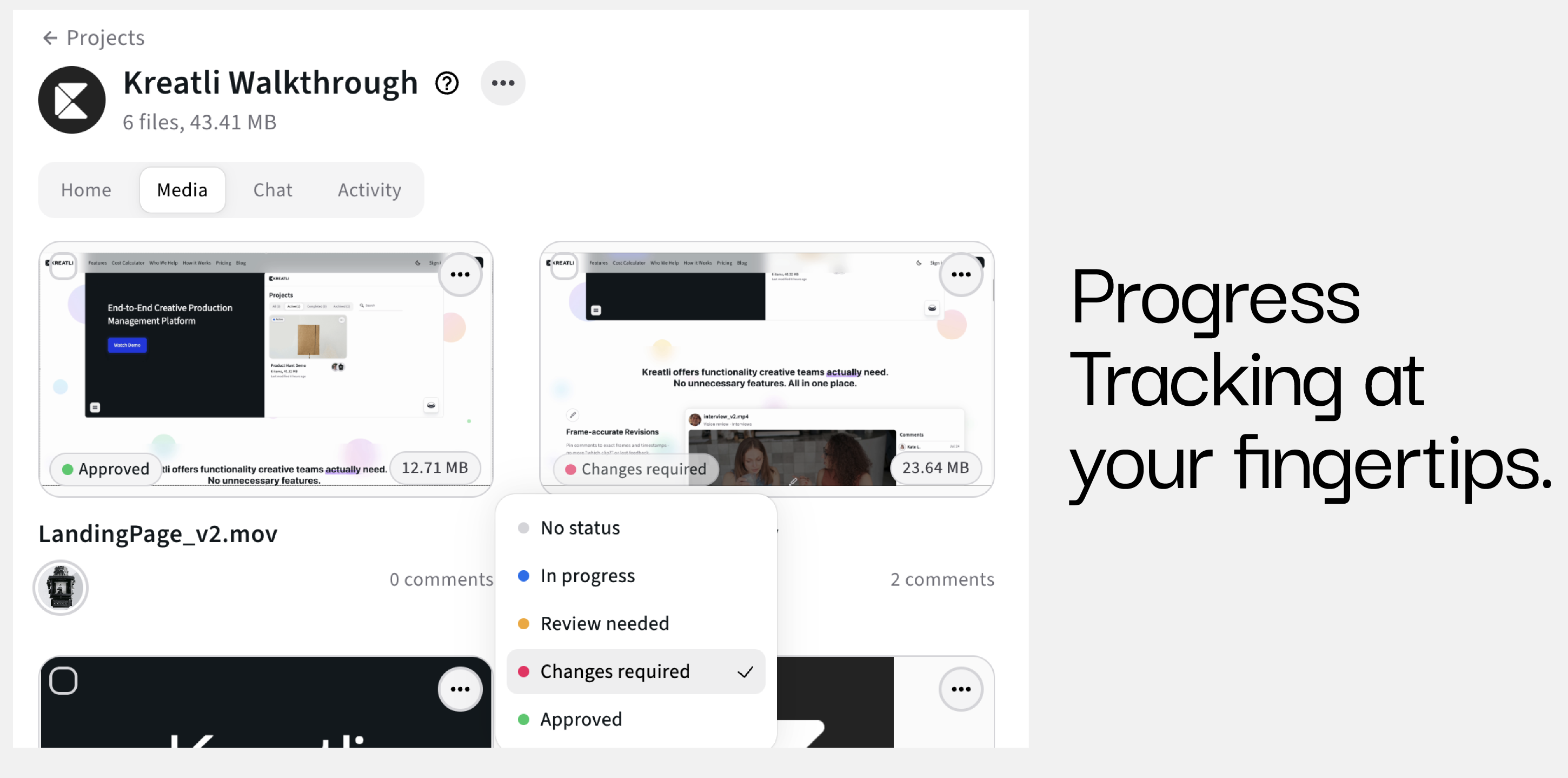
Structure workflows around deliverables, not tasks. Each video, design, or campaign asset should have clear ownership, status, and version history.
Production management software like Kreatli is designed around this model, allowing teams to manage creative outputs as first-class objects rather than buried attachments.
Continue reading: Creative Operations vs Project Management.
How Kreatli solves this for production teams:
Mistake #2: Fragmenting Feedback Across Too Many Tools
Feedback often lives everywhere except where the work is. Email threads, Slack messages, comments in review tools, and verbal notes all compete for attention.
When feedback is fragmented, creatives waste time reconciling input, stakeholders repeat themselves, and approvals slow down. Worse, critical decisions get lost.
Common symptoms
“Did we already address this comment?”
Conflicting feedback from different stakeholders
Revisions based on outdated notes
How to fix it
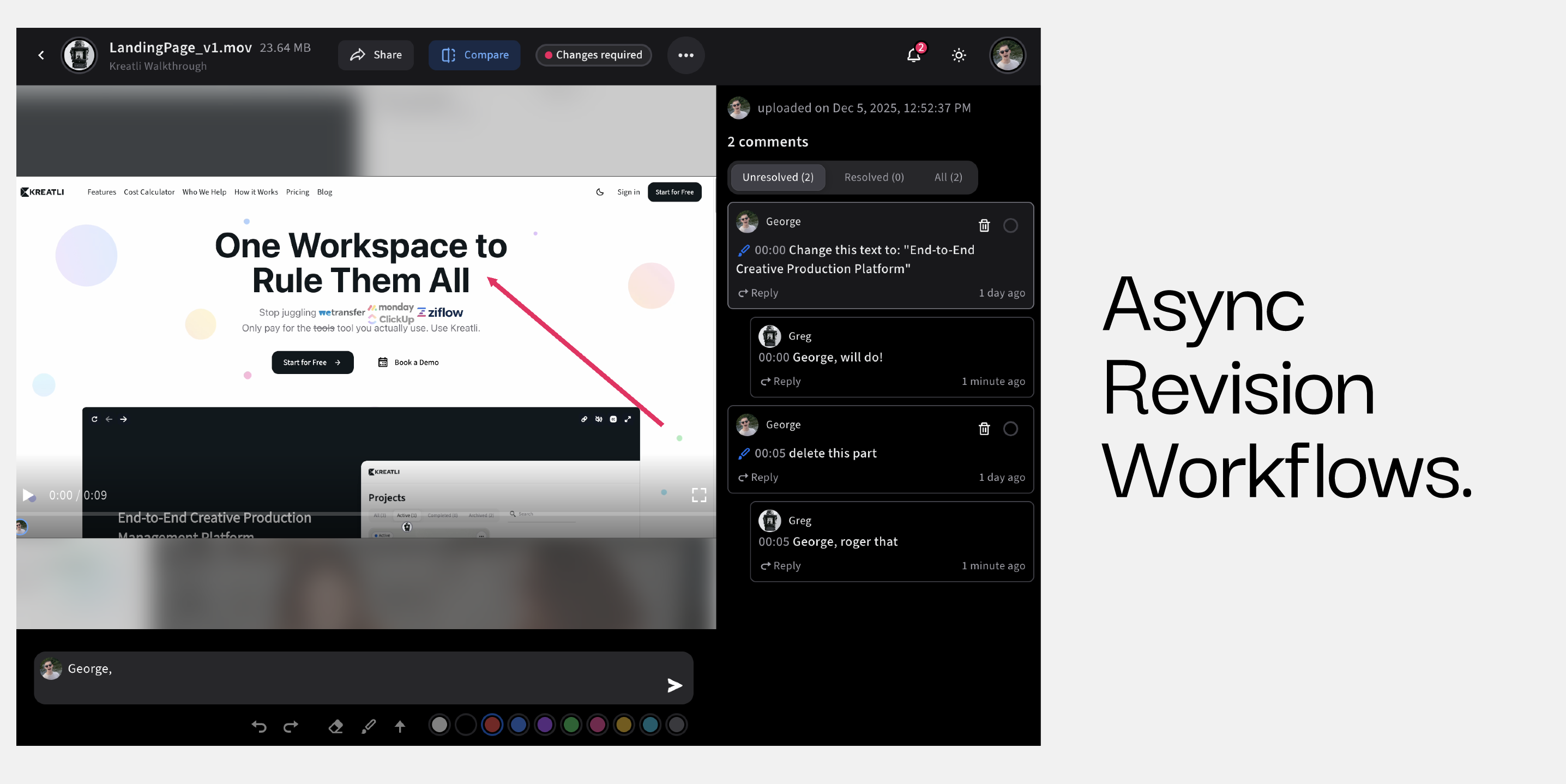
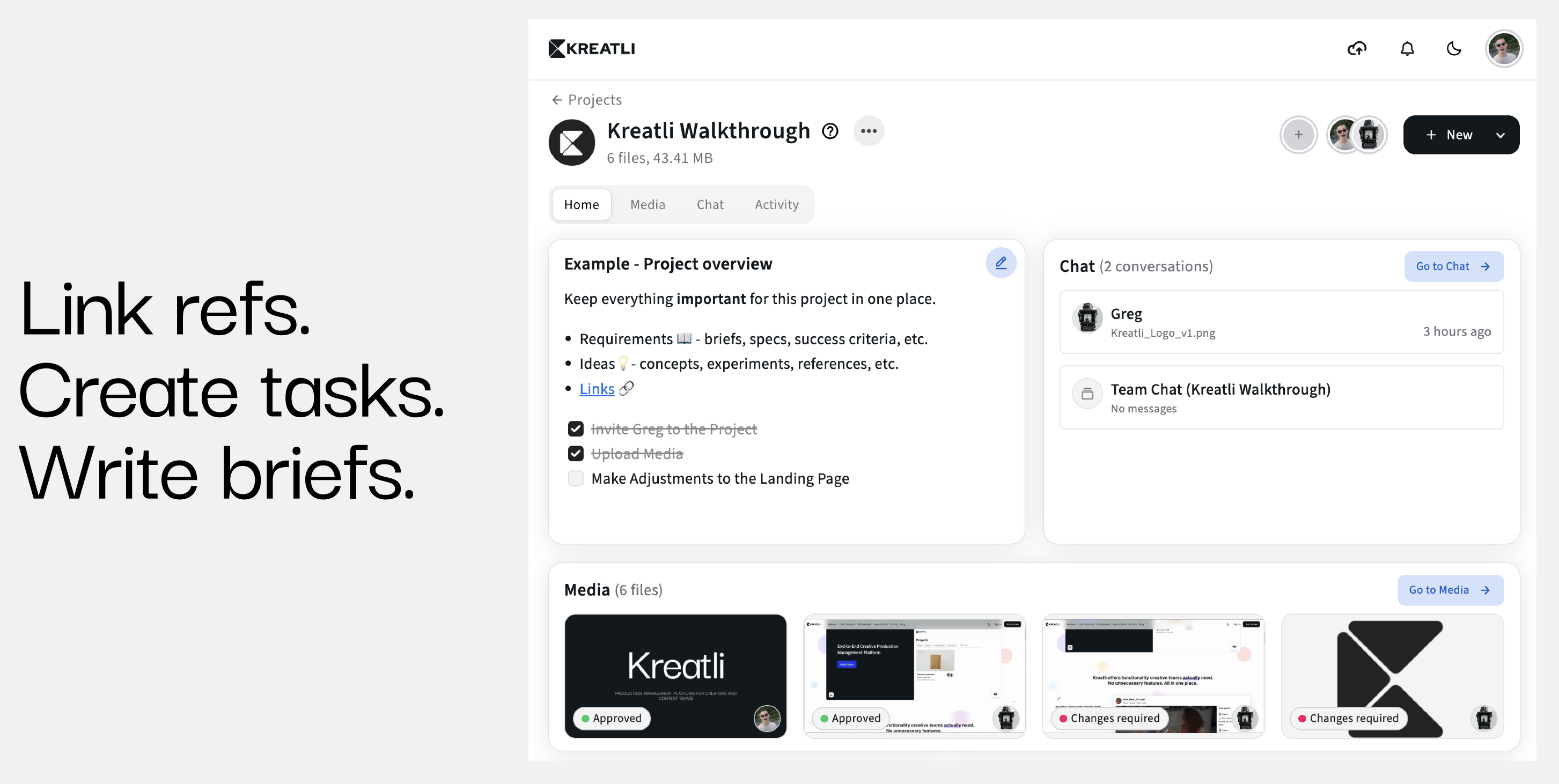
Centralize feedback directly on the asset and its versions. Feedback should be contextual, traceable, and visible to everyone involved.
Modern creative workflows consolidate comments, decisions, and approvals at the deliverable level instead of scattering them across platforms. This reduces rework and speeds up approvals dramatically.
Continue reading: Best Virtual Team Collaboration Tools for Creative Teams (2026).
How Kreatli solves this for production teams:
Mistake #3: Lacking Clear Ownership and Accountability
When everyone is involved, no one is responsible. Creative production often suffers from unclear ownership, especially in collaborative environments.
Without explicit responsibility, approvals stall, deadlines slip, and teams default to status meetings instead of execution.
Common symptoms
Assets stuck “waiting for feedback” indefinitely
Producers chasing updates manually
Stakeholders unsure who owns the final decision
How to fix it
Assign clear ownership at the deliverable level, not just at the project level. Every asset should have a responsible owner accountable for moving it forward.
Production workflows should make ownership visible at all times, reducing ambiguity and eliminating unnecessary follow-ups.
Mistake #4: Managing Multi-Channel Assets in Isolation
Campaigns rarely consist of a single asset anymore. A single initiative might include long-form video, short social cutdowns, static designs, landing pages, and localized variants.
When teams manage these assets independently, inconsistencies creep in and context gets lost.
Common symptoms
Duplicate work across teams
Inconsistent messaging across channels
Lost relationships between parent assets and variants
How to fix it
Group related assets under campaigns or initiatives and make relationships explicit. Teams should see how assets connect across channels and formats.
Campaign-level organization allows for better reuse, faster iteration, and consistent execution across platforms.
How Kreatli solves this for production teams:
Mistake #5: Relying on Storage Tools as Workflow Systems
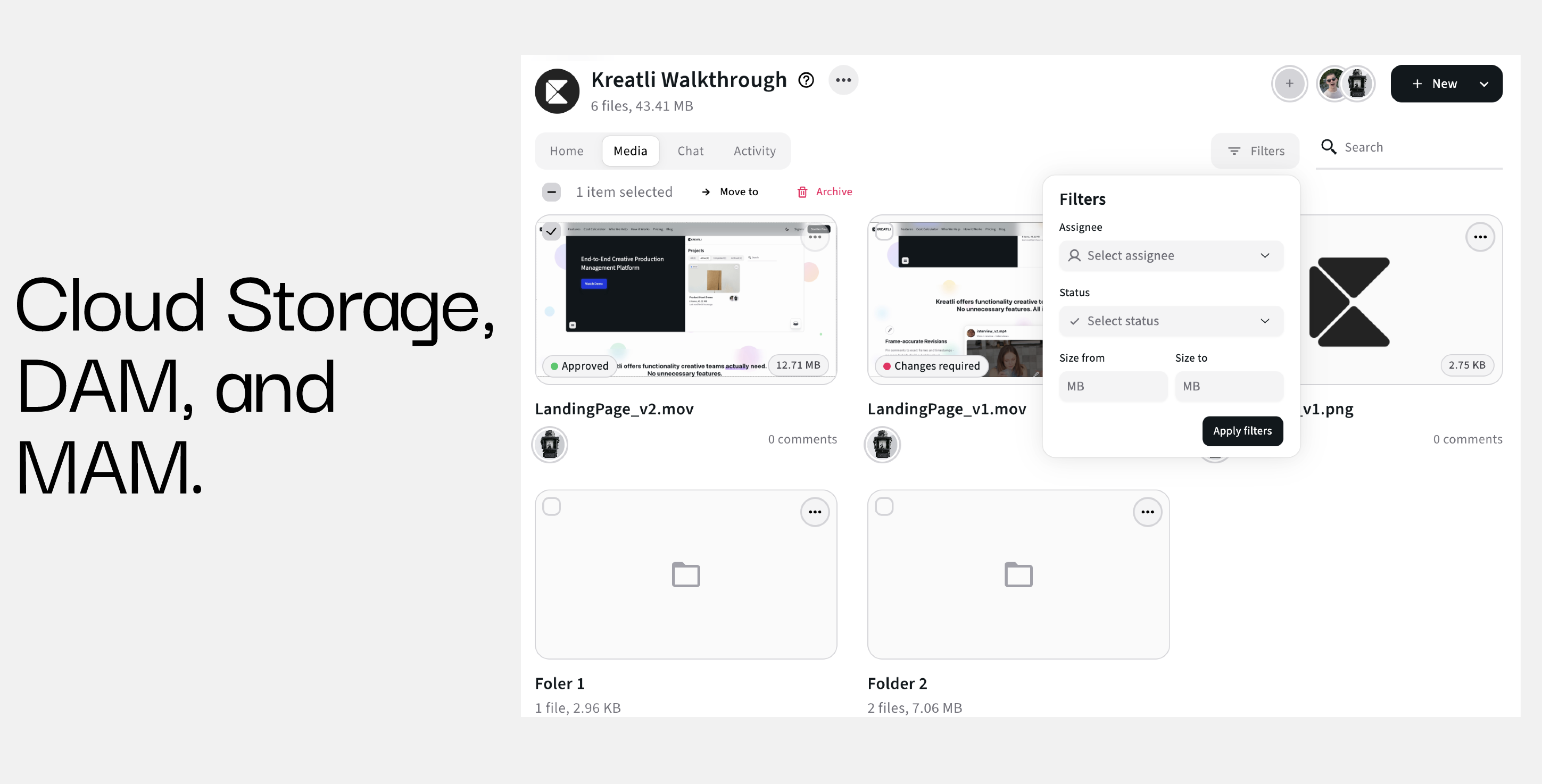
Cloud storage tools are excellent for storing files. They are not designed to manage creative production workflows.
When teams rely on folders as workflows, they lose visibility into progress, approvals, and responsibilities.
Common symptoms
Folder names used as status indicators
Multiple “final” files
No clear audit trail of decisions
How to fix it
Separate storage from production management. Files should live within a workflow context that includes status, feedback, ownership, and approvals.
Production management platforms like Kreatli embed files into structured workflows, ensuring clarity without forcing teams to abandon familiar storage patterns entirely.
Continue reading: The Best Frame.io Alternatives for Video Review & Approval (2026).
Why These Mistakes Persist
These workflow issues persist not because teams are careless, but because creative production has outgrown legacy tools. Volume, velocity, and complexity have increased faster than workflows have evolved.
Teams that succeed do not work harder, they design better systems.
How Modern Teams Avoid These Pitfalls
High-performing creative teams share a few common traits:
Deliverable-first thinking
Centralized feedback and approvals
Clear ownership and accountability
Campaign-level visibility
Purpose-built production management software
These principles allow teams to scale output without scaling chaos.
Frequently Asked Questions (FAQ)
What is the biggest mistake in creative production workflows?
The most common mistake is managing creative work like generic project work instead of structuring workflows around deliverables and asset lifecycles.
How do creative teams reduce revision cycles?
By centralizing feedback, clarifying ownership, and ensuring all comments are tied to specific asset versions.
Are project management tools enough for creative teams?
Generic project tools help with task tracking, but they lack the context and structure required for creative production workflows.
How do agencies manage multi-channel campaigns efficiently?
By grouping related assets under campaigns, making relationships explicit, and maintaining consistent workflows across formats.
What software is best for creative production management?
Production management software built specifically for creative teams, such as Kreatli, provides better visibility, accountability, and scalability than generic tools.
Ready to see how it works?
Visit Kreatli to explore project templates, playback reviews, and file exchange views that streamline creative production.