Scaling In-House Creative Teams Without Chaos
Learn how marketing and content teams can scale in-house creative operations without bottlenecks, burnout, or tool sprawl.
Article summary
Learn how marketing and content teams can scale in-house creative operations without bottlenecks, burnout, or tool sprawl.
In-house creative teams are under more pressure than ever.
Marketing demands more content. Channels multiply. Turnaround times shrink. Stakeholders expect agency-level quality with internal-team speed.
Most in-house teams respond by hiring more designers, editors, or motion artists. That works, briefly. Then complexity increases, communication breaks down, and output plateaus.
The teams that scale successfully do not just add people. They change how creative work flows.
This guide explains how marketing and content teams can scale in-house creative operations sustainably, without burning out talent or drowning in tools.
Why In-House Creative Teams Hit a Scaling Wall
Early-stage in-house teams often operate informally:
Requests arrive via Slack or email
Priorities shift daily
Feedback happens in meetings or comment threads
Files live across drives and chats
This works when volume is low.
As demand increases, teams experience:
Constant context switching
Conflicting stakeholder feedback
No clear prioritization
Producers acting as human routers
Creativity constrained by operational chaos
At this point, the problem is no longer talent. It is structure.
Scaling Is an Operations Problem, Not a Creative One
In-house creative teams scale by improving workflows, not by adding headcount.
This is where creative operations becomes critical.
Instead of asking:
“Who can do this?”
High-performing teams ask:
“How does this work move through the system?”
For foundational context, see: Creative Operations vs Project Management for Creative Teams.
Tip #1: Separate Intake From Execution
One of the biggest scaling mistakes is allowing requests to enter production unchecked.
Best-in-class in-house teams:
Centralize all requests
Require structured briefs
Review requests asynchronously
Prioritize based on impact and capacity
This protects creative focus and creates transparency for stakeholders.
Related guide on intake systems: Building an Effective Creative Brief.
Tip #2: Standardize Production Stages
When every project is handled differently, scaling becomes impossible.
Standard production stages might include:
Intake approved
In progress
Review
Revisions
Final approval
Delivered
These stages create a shared language between marketing, content, and creative teams.
Standardization does not reduce creativity. It removes friction.
Tip #3: Treat Assets as First-Class Citizens
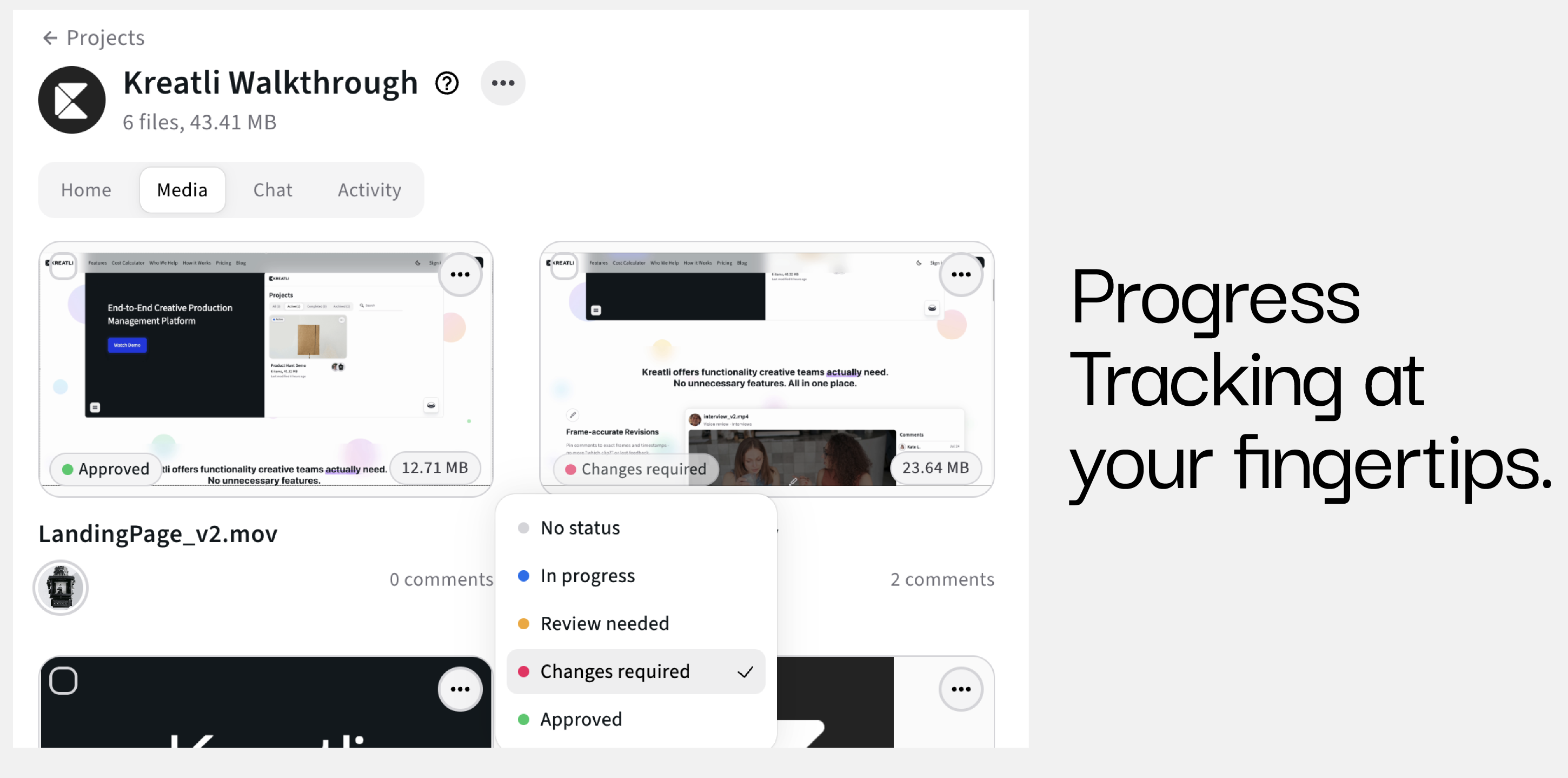
In many teams, tasks are tracked carefully while assets are an afterthought.
This leads to:
Version confusion
Lost feedback
Duplicate work
Scalable teams organize work around:
Assets
Versions
Review cycles
Tasks exist to support asset production, not the other way around.
This distinction is fundamental to production management software, not generic task tools.
Tip #4: Make Feedback Structured and Contextual
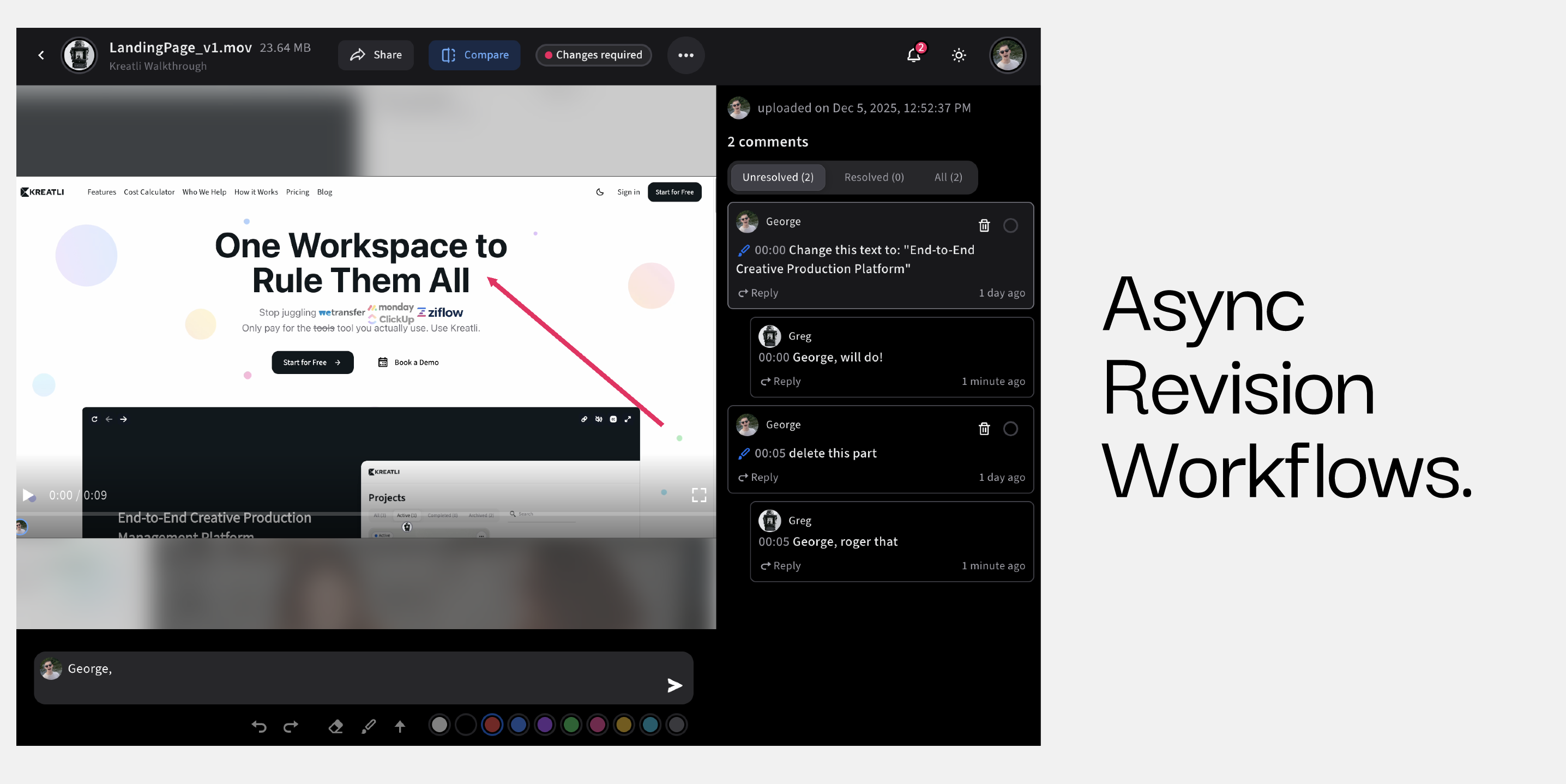
Unstructured feedback is one of the fastest ways to slow teams down.
Scaling teams:
Centralize feedback on the asset itself
Limit the number of reviewers per stage
Separate subjective opinions from objective requirements
Lock approvals before moving forward
This reduces revision cycles and protects creative momentum.
Tip #5: Create Visibility for Non-Creatives
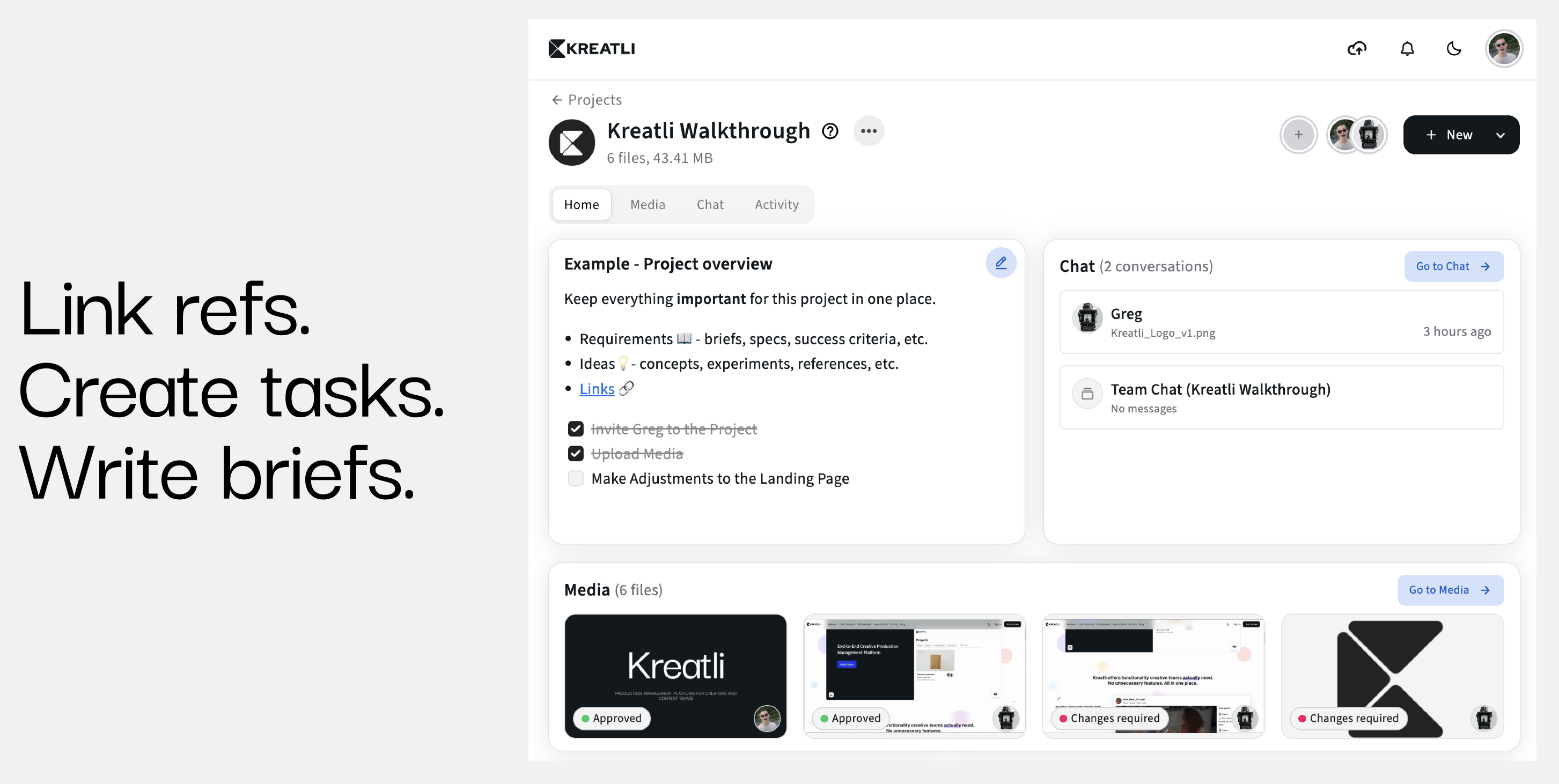
As teams scale, more stakeholders want visibility.
Instead of status meetings, provide:
Real-time project views
Clear production stages
Ownership and next steps
This builds trust without interrupting creative work.
Tip #6: Align Creative Output With Marketing Goals
Scaling output without alignment creates noise, not impact.
High-performing teams:
Tie briefs to business objectives
Review work against defined success criteria
Retire low-impact requests
Reuse and repurpose assets strategically
This ensures growth in volume also delivers growth in results.
Tip #7: Reduce Tool Sprawl as You Scale
Many in-house teams accumulate:
One tool for tasks
One for files
One for feedback
One for approvals
One for communication
As scale increases, coordination cost explodes.
Production management software reduces this by consolidating:
Workflows
Assets
Feedback
Visibility
This is especially valuable for in-house teams that must collaborate across departments.
Related reading: The Producer’s Playbook: Running Creative Production with Management Software
What Scaling Looks Like in Practice
When in-house creative teams scale successfully:
Intake becomes predictable
Priorities are transparent
Feedback is faster and clearer
Producers manage flow, not chaos
Creatives spend more time creating
Importantly, leadership gains confidence in the team’s ability to deliver consistently.
How Kreatli Supports Scalable In-House Teams
Kreatli is built as production management software for creative teams, not generic project management.
For in-house marketing and content teams, Kreatli supports:
Structured intake and briefing
Stage-based production workflows
Asset-centric collaboration
Clear review and approval flows
Cross-functional visibility without noise
This allows teams to scale output while maintaining quality, clarity, and sanity.
Final Thoughts
Scaling an in-house creative team is not about working harder.
It is about designing better systems.
Marketing and content teams that invest in creative operations and production management can increase output, improve collaboration, and protect their creative talent.
The earlier these systems are put in place, the easier scaling becomes.
Frequently Asked Questions
How do in-house creative teams scale effectively?
By improving intake, workflows, feedback, and visibility rather than simply hiring more people.
When should an in-house team invest in production management software?
When request volume increases, feedback cycles multiply, or coordination across teams becomes a bottleneck.
Is production management different from project management?
Yes. Production management focuses on workflows, assets, and iterations, while project management focuses on tasks and timelines.
Can small in-house teams benefit from these practices?
Yes. Early standardization prevents chaos as demand grows.
What role does creative operations play in scaling?
Creative operations owns the systems and processes that allow creative teams to produce consistently at scale.
Ready to see how it works?
Visit Kreatli to explore project templates, playback reviews, and file exchange views that streamline creative production.