How to Annotate an Image
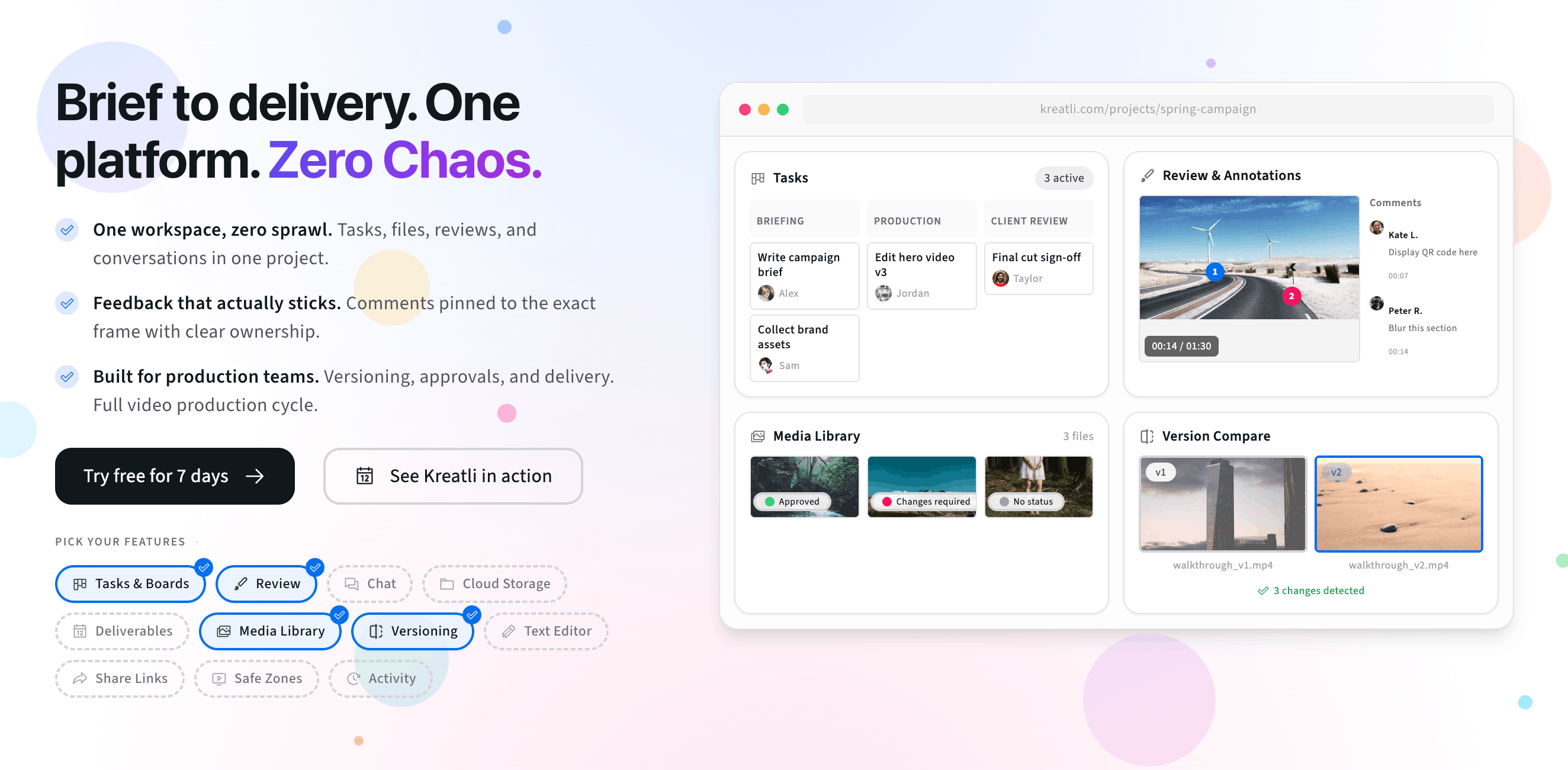
A practical guide for image review: pin comments to exact locations, add markup for clarity, and keep revisions and approvals organized without messy email threads.
How to annotate an image is about leaving feedback that’s precise and easy to act on. Instead of “make this better,” you want location-pinned comments plus optional markup so “this area” is never vague and revisions don’t bounce between screenshots and email threads.
Treat this page as the general playbook for any still asset. When your work is mostly designed graphics, follow the picture-focused guide; when it is mostly photography or retouching, use the photo-focused guide so examples match your workflow.
Key takeaways
- Pin comments to exact locations so feedback is unambiguous.
- Pair markup (arrows, highlights) with a short written note explaining the intent.
- Review at full resolution to catch details that disappear in scaled-down previews.
- Resolve annotations as changes are applied to keep the review status clear.
What “annotate an image” means
In an image review workflow, annotation means your note is anchored to a specific spot. Reviewers can jump from a comment to the exact location, and teams can track what’s resolved across rounds.
Spot pin: the annotation is tied to a location on the image.
Clear intent: what to change, why it matters, and what success looks like.
Version clarity: feedback stays tied to the correct revision.
Why annotated images beat vague feedback
Vague notes slow teams down. Annotations reduce ambiguity—your collaborator sees the exact area you’re referencing and can make the change without guessing.
Design feedback: point to the exact spacing, alignment, or typography to change.
Marketing review: clarify copy, logo placement, and brand consistency by location.
Production checks: confirm crops, safe areas, and export details visually.
For the platform overview, see Annotate Image.
How to annotate an image (step-by-step)
Open the image in a review tool that supports pinned comments (and optional markup).
Click the exact area you want to address to anchor the comment.
Write the annotation with action + intent (what to change and why).
Add markup when helpful (arrow/box/highlight) to remove ambiguity.
Share a review link so stakeholders annotate in one place.
Resolve comments as edits are made, then upload the next version if needed.
Best practices for image annotations
One idea per comment: keep feedback separable so it’s easy to resolve.
Be specific: name the object/area, not just “this.”
Say what success looks like: “matches brand colors,” “reads on mobile,” or “passes contrast checks.”
Use markup for spatial notes: arrows/boxes are perfect for “this edge” feedback.
Try annotating an image now
The interactive preview below mirrors a simple image annotation flow. When you’re ready, sign up free or book a demo.
Upload an image to get started
Drag and drop an image here, or click the button below
Free tools, guides, and platform features
Below are free tools that pair with image annotation, plus related guides and platform features to explore next.
Free tools for image markup and review
Try tools that complement pinned comments, markup, and approvals.
Image Annotator — Add location-pinned comments, highlights, drawings, and markup to images. Share with clients; recipients do not need a Kreatli account.
Image Reviewer — Review images online with location-pinned comments, annotations, and approvals. Share with clients; recipients do not need a Kreatli account.
PDF Annotator — Add location-pinned comments, highlights, drawings, and markup to PDFs. Share with clients; recipients do not need a Kreatli account.
Video Annotator — Add frame-accurate comments, drawings, and markup to video. Pin feedback to exact timestamps and share with clients; recipients do not need a Kreatli account.
More guides and examples
Read more about review, approvals, and version-aware image workflows.
What Is Proofing Software? A Modern Guide for Creative Teams
Proofing Software vs Production Management: Key Differences and the Best Choice for Creative Teams
More resources
Capabilities that support image review, markup, approvals, and secure storage.
Annotate Image — Annotate and review images with comments and markup. Add feedback directly on images for precise, location-pinned review.
Draw on Image — Draw and markup directly on images for precise feedback. Freehand, shapes, and annotations on images.
Secure Asset Storage — Enterprise-grade storage for creative assets. Organize files, track versions, and protect your media with reliable infrastructure.
FAQ: Annotate an image
What is an image annotation?
An image annotation is feedback tied to a specific location on the image—often a pinned comment, highlight, arrow, or box. It removes ambiguity so editors and designers know exactly what area you mean.
Is drawing on an image the same as annotating it?
Drawing is one type of annotation. Annotating usually includes both visual markup (arrows, boxes, highlights) and written comments that explain intent. The best workflow uses both: markup shows where; comments explain what and why.
How do I make image feedback actionable?
Call out the exact location, the requested change, and the intent. For example: “On the headline area, increase contrast so it passes accessibility and reads on mobile.”
Can clients annotate an image without signing up?
Yes—if you share a guest-friendly review link, clients can open the image and leave pinned comments without creating an account. This reduces friction while keeping feedback centralized.
How do I handle new versions of an image during review?
Use version-aware review so annotations stay tied to the correct revision. Resolve comments as changes are made and upload the next version when ready—this prevents confusion between v1 notes and v3 output.
Still have questions?
Reach us at support@kreatli.com and we will help you set up an image annotation flow that fits your team.
Ready to give precise image feedback?