How to Annotate a Document
A practical guide for document review: pin comments to the right spot, add markup for clarity, and keep versions and approvals organized without messy email threads.
How to annotate a document is about leaving feedback that stays attached to the right place. Instead of “see my notes below,” you want pinned comments and markup (highlights, arrows, boxes) so reviewers and editors can act quickly without guessing.
Key takeaways
- Pin comments to specific locations on the page so reviewers know exactly what you mean.
- Use markup (arrows, highlights, boxes) for spatial feedback and text notes for content-level changes.
- Keep one comment per issue — bundling multiple changes into one note slows down resolution.
- Resolve comments as they are addressed so the team can see remaining work at a glance.
What “annotate a document” means
In a review workflow, document annotation means your feedback is anchored to a specific spot (text, page, or element). That anchor removes ambiguity and helps teams track what’s resolved vs what’s still open across rounds.
Location: the note is tied to the exact area it refers to.
Intent: what to change and why it matters.
Resolution: a simple “open vs resolved” status prevents repeat work.
Comments vs markup: what to use when
Use comments to explain, and markup to point. When both are available, you get fast comprehension and fewer back-and-forth messages.
Comments: decisions, questions, and copy changes (“change this sentence to…”).
Highlights: call out specific text that needs attention.
Shapes/drawing: layout issues, spacing, and “this element” feedback in PDF exports.
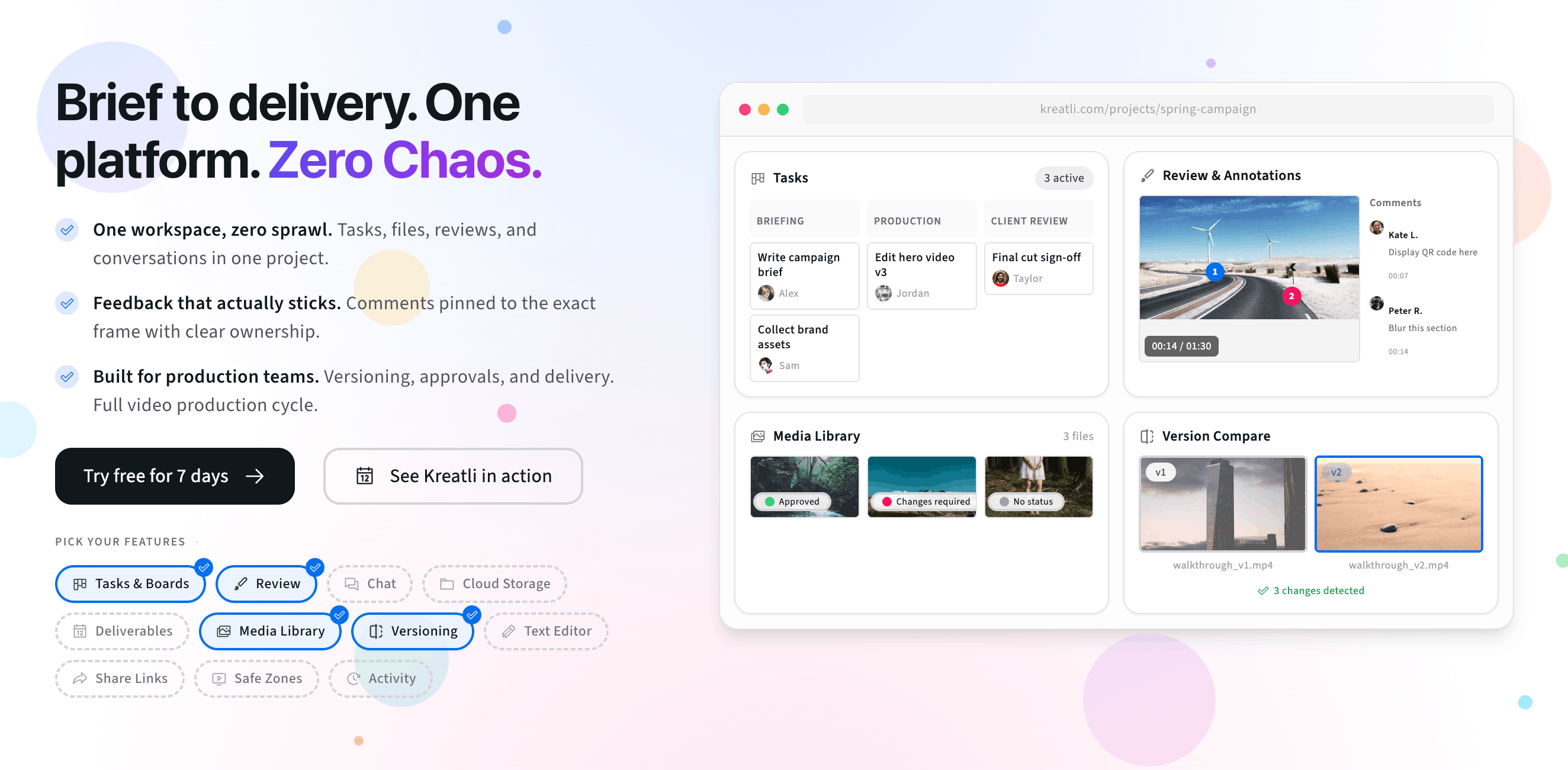
For the platform overview, see Annotate Document.
How to annotate a document (step-by-step)
Open the document in a review tool that supports pinned comments and markup.
Navigate to the exact page/section you want to review.
Pin a comment directly on the relevant spot.
Add markup when helpful (highlight, arrow, box) to remove ambiguity.
Share a review link so feedback stays in one place.
Resolve annotations as changes are completed, then upload the next revision.
Best practices for actionable document annotation
One request per comment: split multi-part feedback into separate notes for clean resolution.
Write for action: “Change X to Y” beats “This feels off.”
Add the why: brand, compliance, clarity, or user impact.
Confirm success: what “done” looks like (style guide, approved copy, layout rules).
Try annotating a document now
The interactive preview below mirrors a basic document annotation flow. When you’re ready, sign up free or book a demo.
Upload a PDF to get started
Drag and drop a PDF here, or click the button below
Free tools, guides, and platform features
Below are free tools that pair with document review, plus related guides and platform features to explore next.
Free tools for document annotation
Try tools that complement pinned comments, markup, and approvals.
PDF Annotator — Add location-pinned comments, highlights, drawings, and markup to PDFs. Share with clients; recipients do not need a Kreatli account.
Image Annotator — Add location-pinned comments, highlights, drawings, and markup to images. Share with clients; recipients do not need a Kreatli account.
PDF Reviewer — Review PDFs online with location-pinned comments, annotations, and approvals. Share with clients; recipients do not need a Kreatli account.
Image Reviewer — Review images online with location-pinned comments, annotations, and approvals. Share with clients; recipients do not need a Kreatli account.
More guides and examples
Read more about proofing, approvals, and version-aware review workflows.
What Is Proofing Software? A Modern Guide for Creative Teams
Proofing Software vs Production Management: Key Differences and the Best Choice for Creative Teams
More resources
Capabilities that support document review, versioning, secure storage, and approvals.
Annotate PDF — Annotate and review PDFs with comments and markup. Add feedback directly on PDFs for precise, location-pinned review.
Draw on PDF Document — Draw and markup directly on PDFs for precise feedback. Freehand, shapes, and annotations on PDFs.
Secure Asset Storage — Enterprise-grade storage for creative assets. Organize files, track versions, and protect your media with reliable infrastructure.
FAQ: Annotate a document
What’s the difference between annotating a document and editing it?
Editing changes the source document. Annotating adds feedback on top—comments, highlights, and shapes—so you can review and approve changes without rewriting the file directly. This is especially helpful for stakeholder review and proofing rounds.
What should a good document annotation include?
Include the exact location, the requested change, and the intent. For example: “In this paragraph, replace ‘fast’ with ‘frame-accurate’ to match product language.” One idea per comment makes review easier to resolve.
Should I use comments, highlights, or drawing?
Use comments to explain intent and decisions, highlights to point at text, and drawing (arrows/boxes) when the issue is spatial (layout, alignment, margin, or a specific UI element in a PDF export). The best workflows support all three.
Can external reviewers annotate a document without an account?
Yes—if you share a guest-friendly review link, stakeholders can open the document and leave pinned comments without signing up. That keeps feedback centralized while reducing friction.
How do I avoid losing feedback across versions?
Use version-aware review. Keep annotations tied to the revision they were made on, and resolve them as changes are applied. That prevents “old feedback” from being mistaken for open work on the newest version.
Still have questions?
Reach us at support@kreatli.com and we will help you set up a document annotation flow that fits your team.
Ready to keep document feedback organized?