YouTube Shorts vs channel banner art
This guide focuses on Shorts safe zones (vertical 9:16). Broad youtube safe zone searches can mean Shorts or channel banner—if you need YouTube channel banner size dimensions 2026, use the spec table below and the resizer to validate safe areas on every device.
YouTube channel banner dimensions (2026)
Reference values for YouTube channel banner size dimensions 2026, recommended size and safe area, and file requirements—aligned with common Studio uploads. Always confirm current requirements in YouTube Studio before publishing.
| Recommended size | 2560 × 1440 px |
|---|---|
| Safe zone (text & logos) | 1546 × 423 px |
| Minimum size | 2048 × 1152 px |
| Max file size | 6 MB |
| Accepted formats | JPG, PNG, GIF, BMP |
Open the YouTube banner resizer to preview safe zones on desktop, mobile, tablet, and TV.
Validate vertical Shorts framing (not banner) in the YouTube Shorts safe zone checker.
Quick answers
Short answers to common searches—see the full guide below for depth, templates, and workflows.
YouTube Shorts Safe Zone Guide (2026)
Learn YouTube Shorts safe zones, UI overlays, and text placement best practices to protect visibility and scale short-form video workflows.
Article summary
Learn YouTube Shorts safe zones, UI overlays, and text placement best practices to protect visibility and scale short-form video workflows.
YouTube Shorts Safe Zone Checker
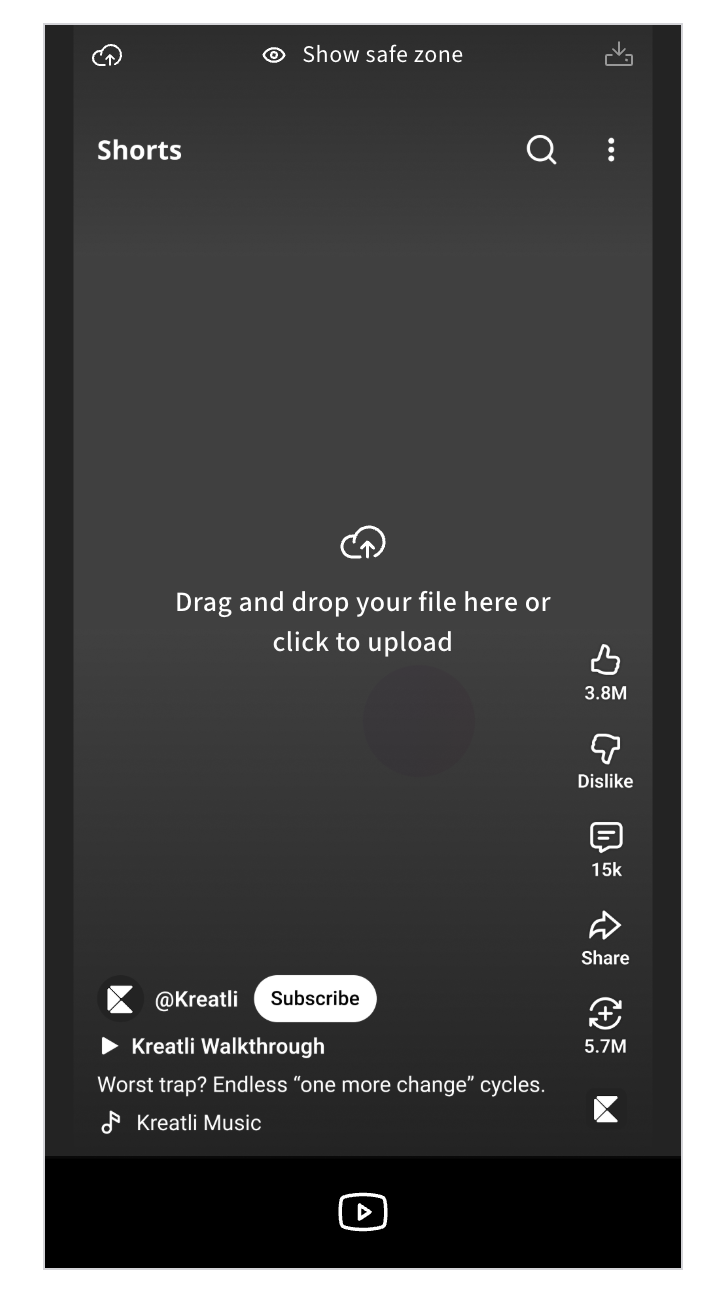
To make sure text, logos, and visuals stay readable on YouTube Shorts, use our free YouTube Shorts Safe Zone Checker. It shows Shorts-accurate safe zones to help you avoid UI overlap.
Upload your video, apply the guide, and export a Shorts-ready version with confidence. No sign-up required.
YouTube Shorts Safe Zone Checker:
https://kreatli.com/social-media-safe-zone-checker/youtube-safe-zone-checker
How to Use Safe-Zone Checker in Your Workflow
Step-by-step guide:
Step 1. Upload Your Video in Kreatli
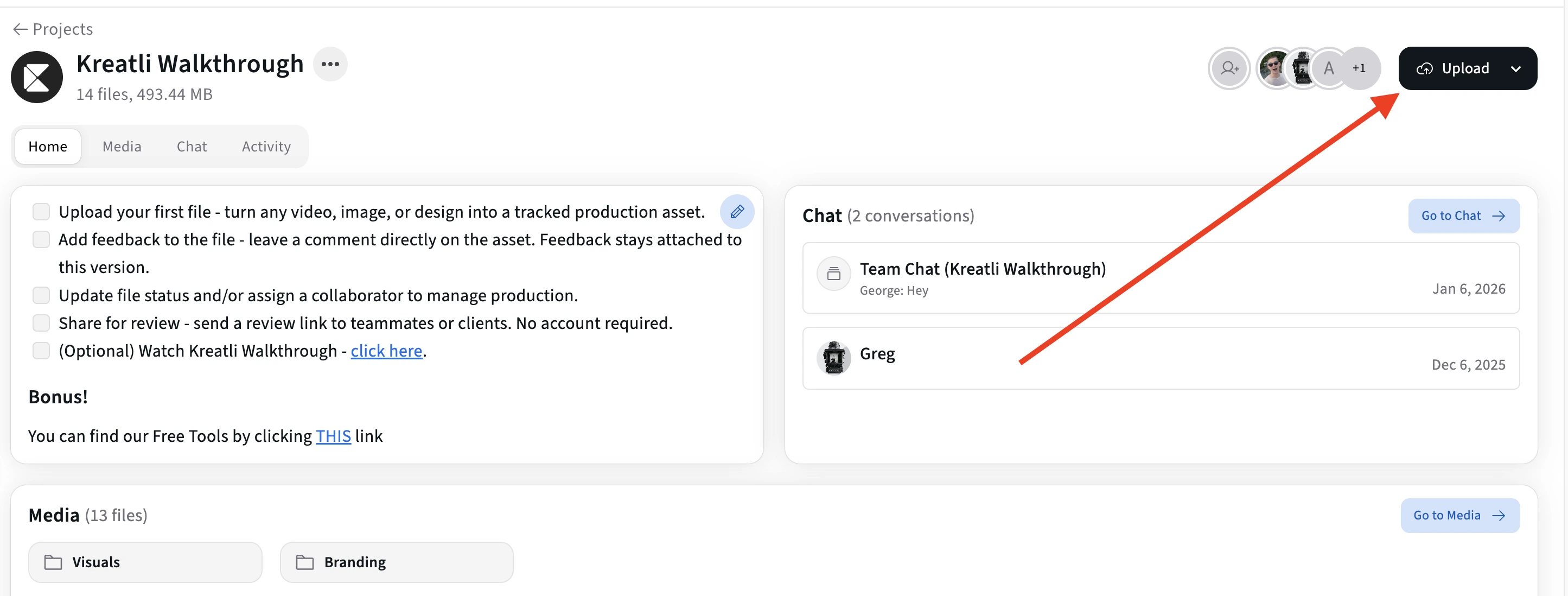
Drag and drop your file to see safe zone overlays showing where UI elements appear on your content.
You can use the Safe Zone Checker with any type of creative asset, not just finished videos. This includes:
Videos
Static images
Thumbnails
Storyboards or design drafts
Early-stage mockups
While we recommend a 1080 × 1920 (9:16) canvas size because it aligns with most vertical social platforms, Kreatli does not restrict you to this format. The tool is intentionally flexible so you can validate layouts at any stage of production and with any dimensions that fit your workflow.
Step 2. Open It and Turn On the Safe Zone Overlay
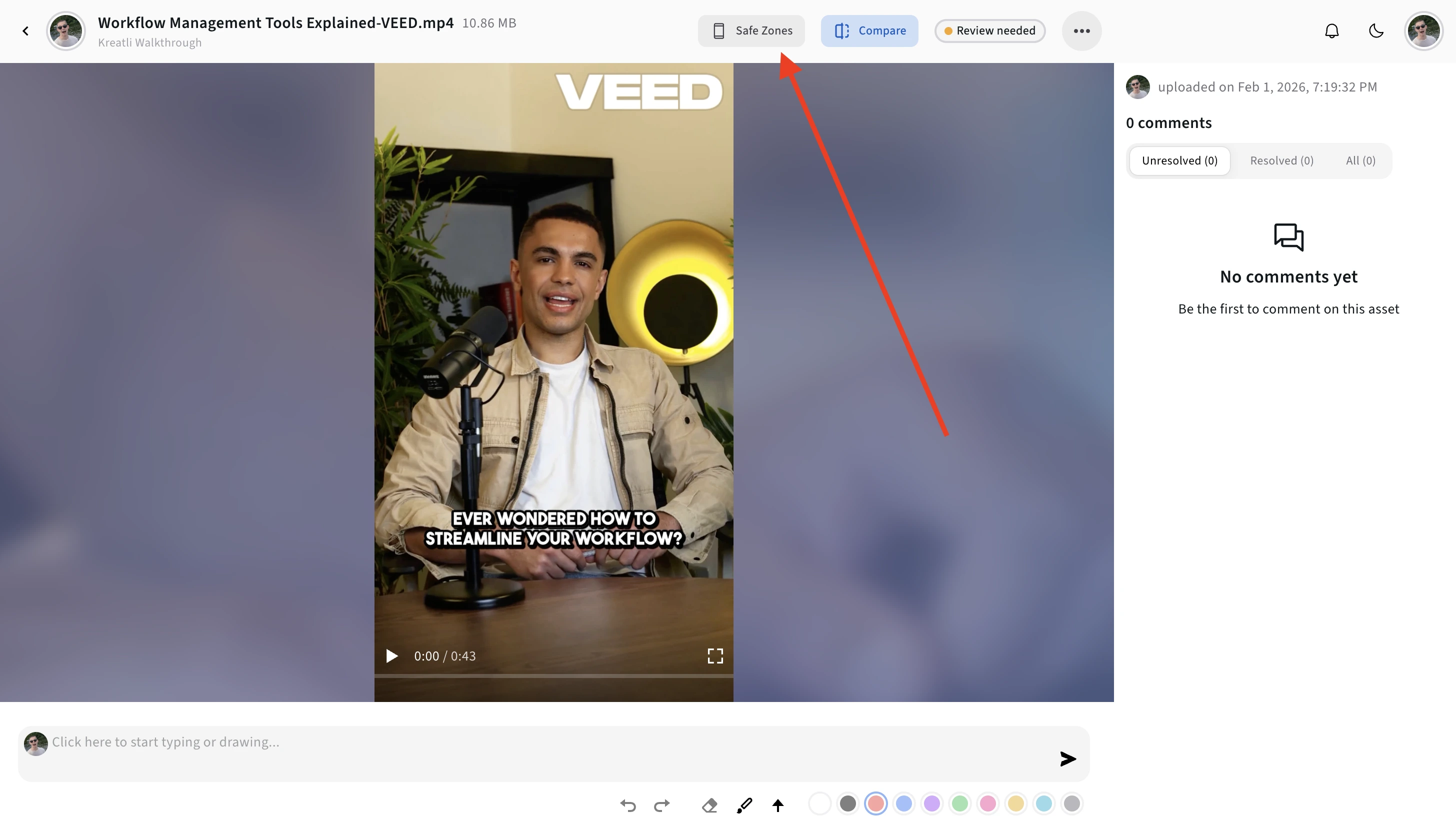
Open the video in the player, then activate the safe zone overlay to see where each platform's UI elements (buttons, captions, profile bars) will appear on your content.
This helps you keep important text, logos, and CTAs in the visible area.
Step 3. Choose Your Platform and Toggle Overlays
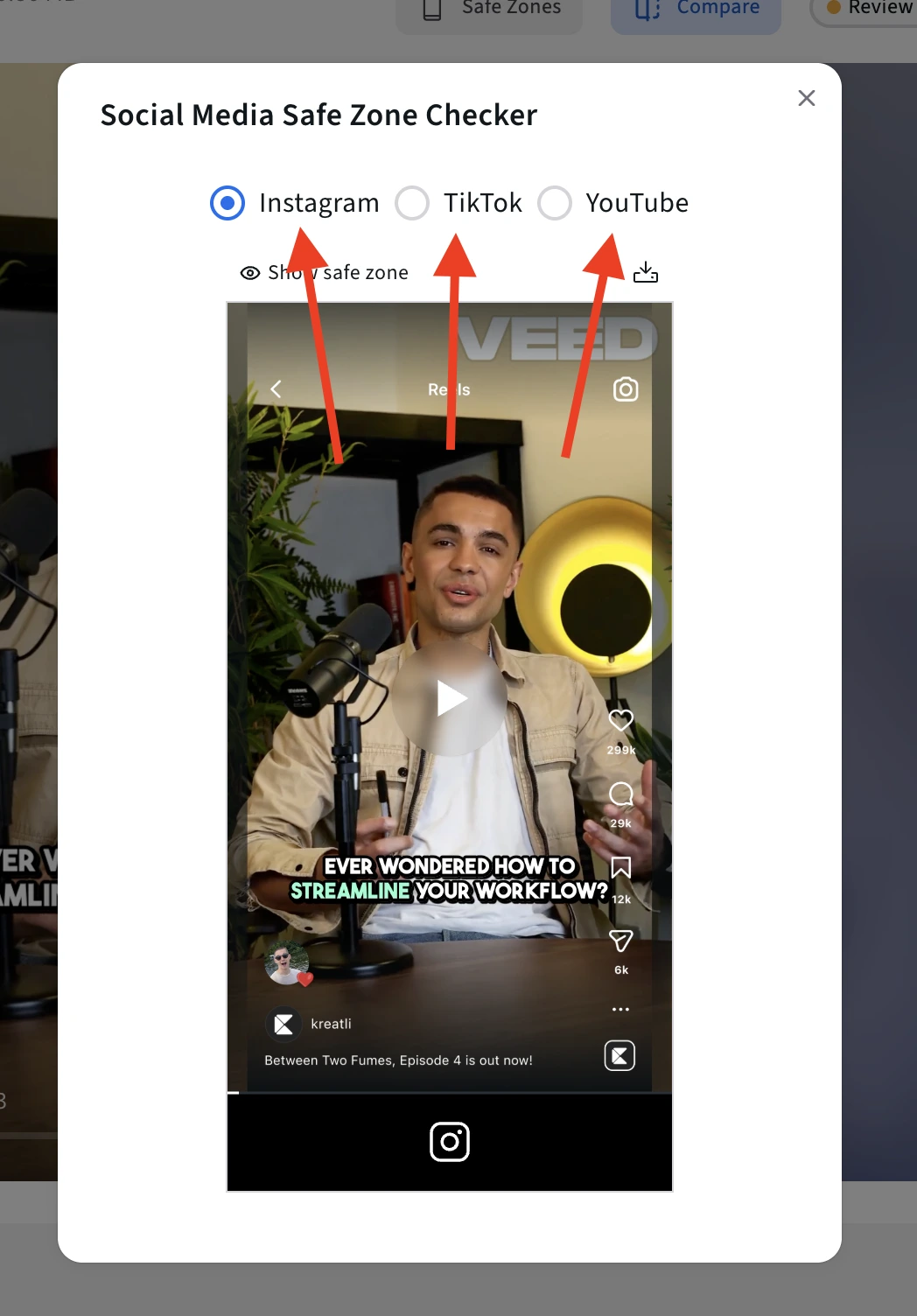
Use the platform selector to switch between:
TikTok
Instagram Reels
YouTube Shorts
Each overlay reflects where key UI elements typically appear, allowing you to quickly spot differences between platforms and ensure your layout works everywhere you plan to publish.
Step 4. Turn the Platform Overlay On or Off as Needed
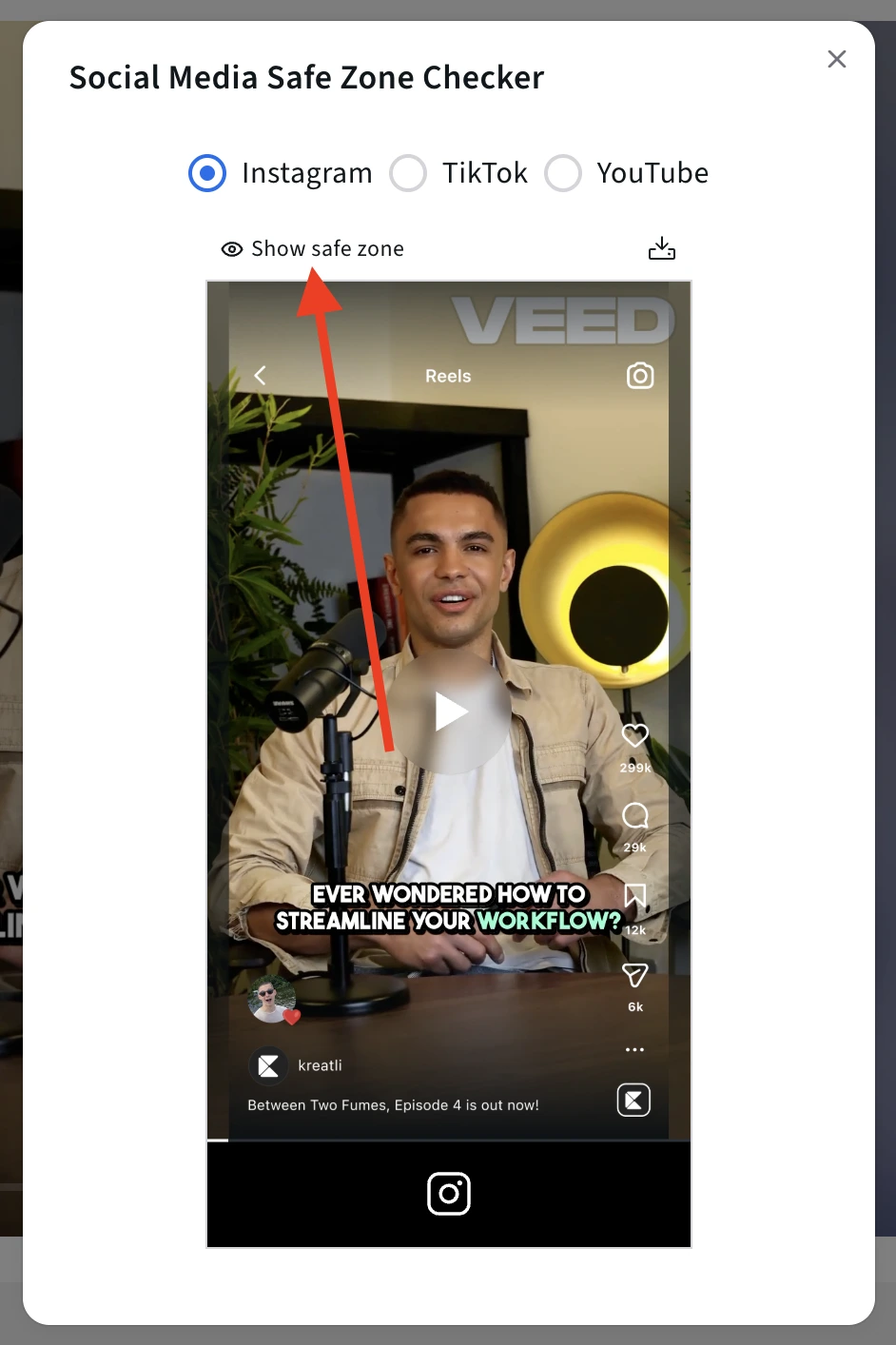
Once you are satisfied with how your content looks across all platform overlays, you can export it directly from the Safe Zone Checker.
Download the asset with the safe zone overlays applied, so everyone involved clearly understands which areas are safe and which are at risk.
Use this exported version to:
Share with stakeholders for final sign-off
Align editors, designers, and social managers on layout constraints
Document safe zone guidelines for future iterations
This exported file acts as a single source of truth for your team, ensuring that when the final version is published, all critical elements remain visible and compliant with platform UI requirements.
Step 5. Review, Get Feedback, Share for Approval, or Download
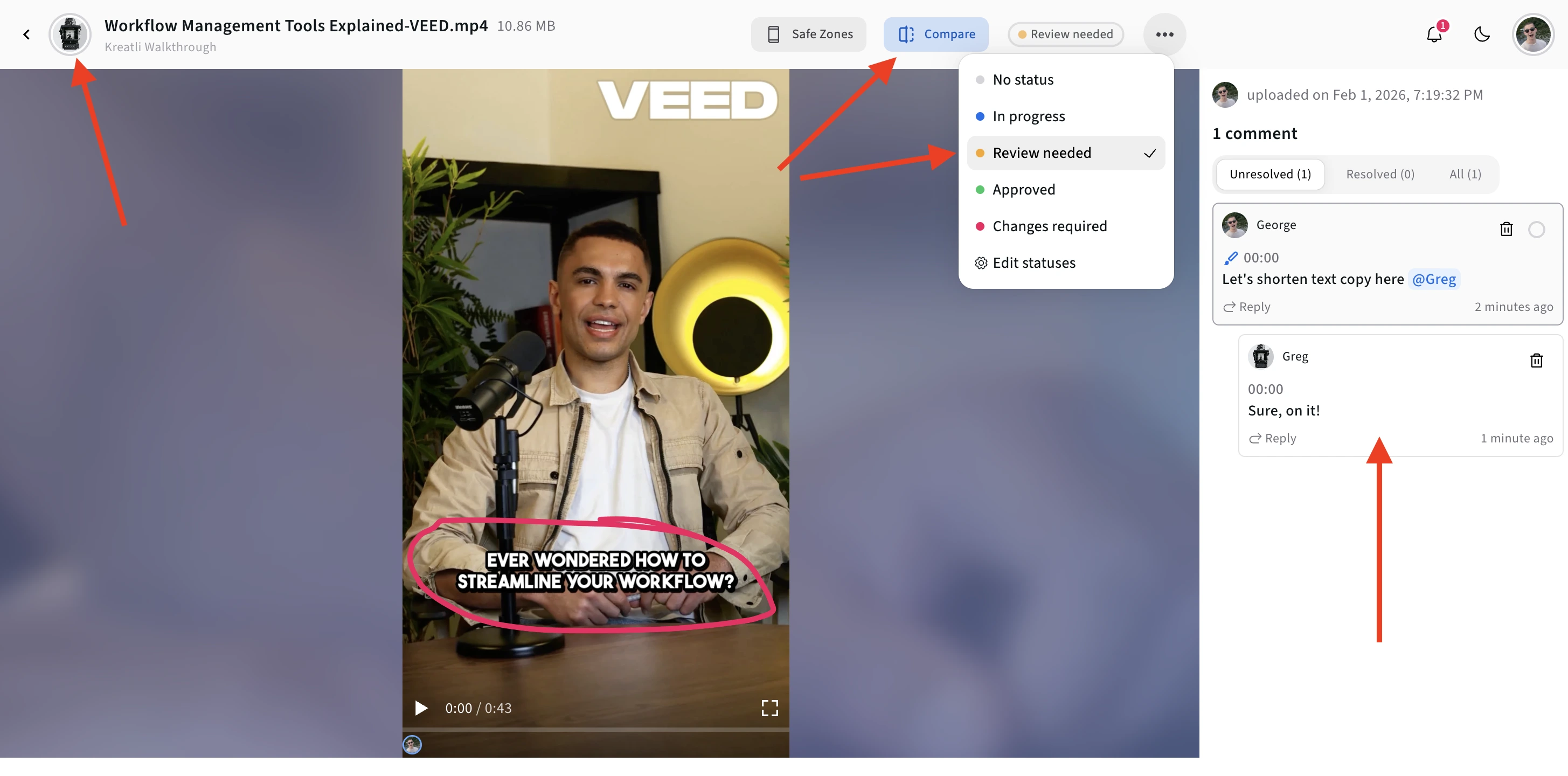
This is where Kreatli goes beyond a simple checker. You can use Kreatli as a production management platform to review this asset with your team, share feedback, and align on changes before publishing.
Instead of passing screenshots around or relying on external messages, teams can review the same visual context and make decisions faster and more clearly.
Start here: https://kreatli.com/
What Is a YouTube Shorts Safe Zone?
A YouTube Shorts safe zone is the portion of the vertical frame that remains unobstructed by UI elements across devices and viewing contexts.
While YouTube’s UI is less aggressive than TikTok’s, overlays still exist:
Channel name and subscribe prompts
Like, comment, and share buttons
Title snippets and system labels
Because Shorts are often repurposed into long-tail discovery, clarity and permanence matter more than flashiness.
YouTube Shorts Video Dimensions (2026)
Aspect ratio: 9:16
Resolution: 1080 × 1920 px
Orientation: Vertical
Although Shorts occupy the full vertical frame, YouTube consistently favors center-weighted composition.
YouTube Shorts UI Overlay Areas
Compared to TikTok, YouTube’s UI is restrained - but still predictable.
Bottom Area (Moderate Risk)
Video title snippets
Channel name and engagement prompts
Right Side (Low–Moderate Risk)
Like, dislike, comment, share icons
Top Area (Low Risk)
System indicators and labels
Key distinction:
YouTube rarely blocks the center of the frame, which makes Shorts more forgiving - but only if content is composed intentionally.
Best Text Placement for YouTube Shorts
YouTube Shorts reward readability over density.
Recommended practices
Place text centrally or slightly above center
Use fewer, larger subtitle lines
Avoid stacking text at the bottom
Common mistakes
Reusing TikTok subtitles that sit too low
Overcrowding with emojis and CTA text
Assuming “less UI” means “no constraints”
Because Shorts often autoplay in feeds and resurface via search, legibility beats trend-driven formatting.
Related: Optimizing Short-Form AI Video Production.
Other Free Tools
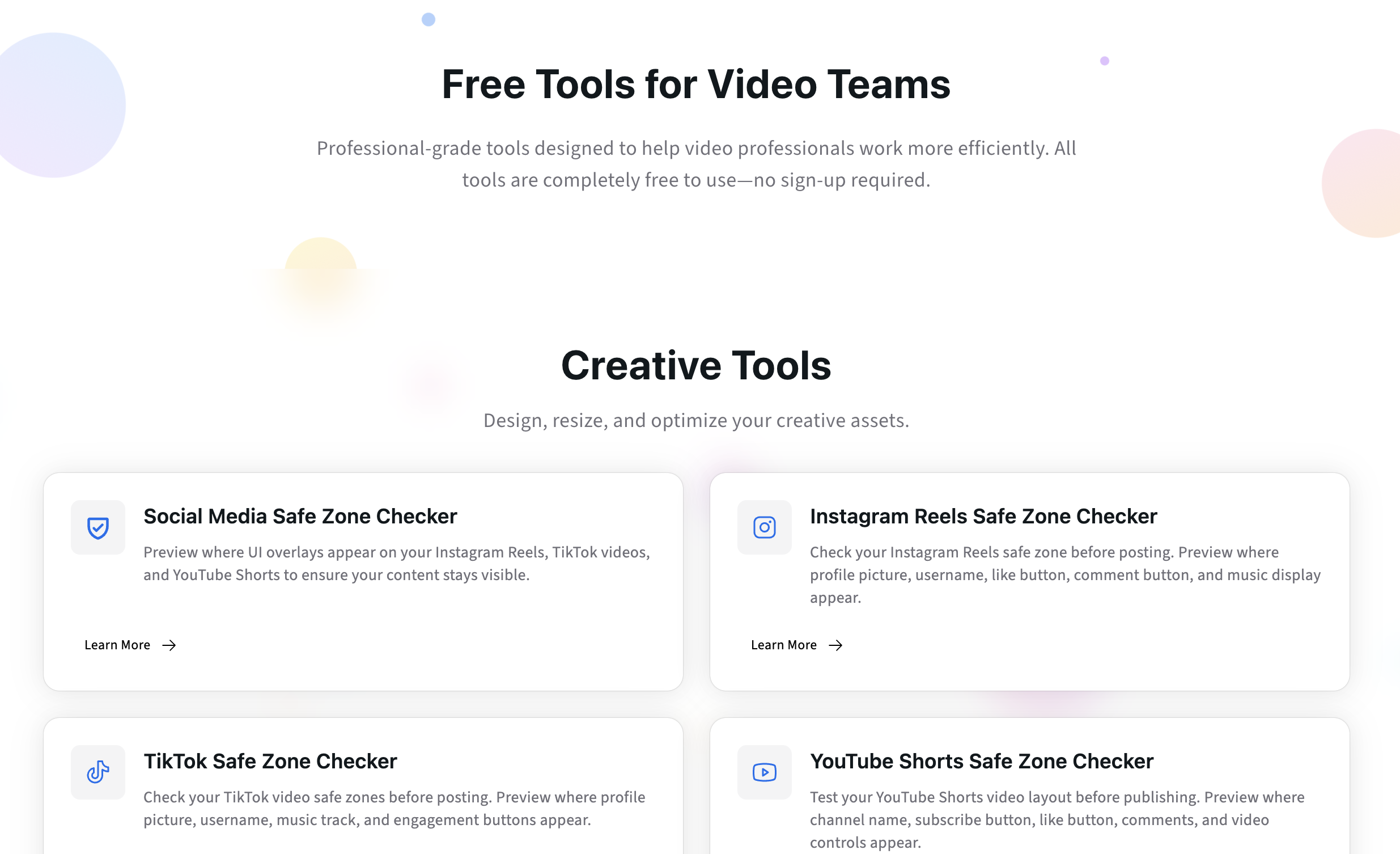
Designing for vertical video doesn’t stop at safe zones.
Creative teams also need to make sure assets are correctly sized, transferable, and ready for review before publishing or client approval
In addition to our Free Safe Zone Checkers, we offer complementary tools like the YouTube Banner Resizer for properly formatting channel banner and a Data Transfer Calculator to estimate upload and download times for large video files.
All tools are free to use and help reduce avoidable revisions before assets enter review.
Explore all free tools:
https://kreatli.com/free-tools
YouTube Shorts and AI-Generated Video
AI tools can rapidly produce Shorts-ready content - but YouTube penalizes clutter and repetition faster than other platforms.
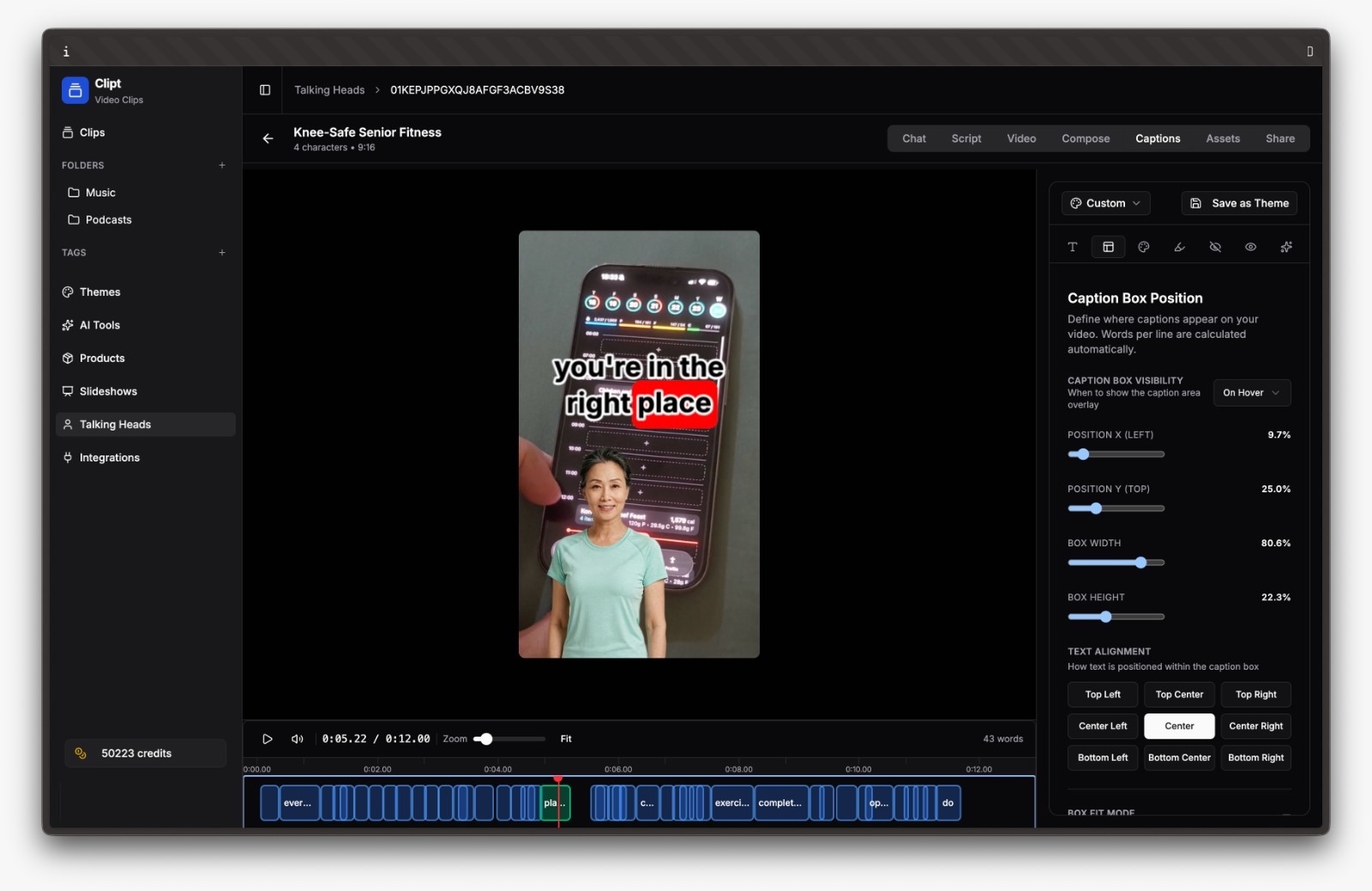
When using AI or UGC generation tools (including partners like Clipt):
Avoid baked-in subtitles near the bottom edge
Frame subjects centrally, not conversationally off-center
Produce Shorts-specific variants, not resized TikToks
The biggest mistake teams make is treating YouTube Shorts as an afterthought rather than a first-class format.
This is how Clipt solves it:
Managing YouTube Shorts in Multi-Channel Campaigns
Short-form campaigns rarely ship as a single video:
TikTok version
Instagram Reels version
YouTube Shorts version
Each has different safe zones and performance signals.
High-performing teams:
Separate Shorts as their own deliverable
Assign platform-specific review criteria
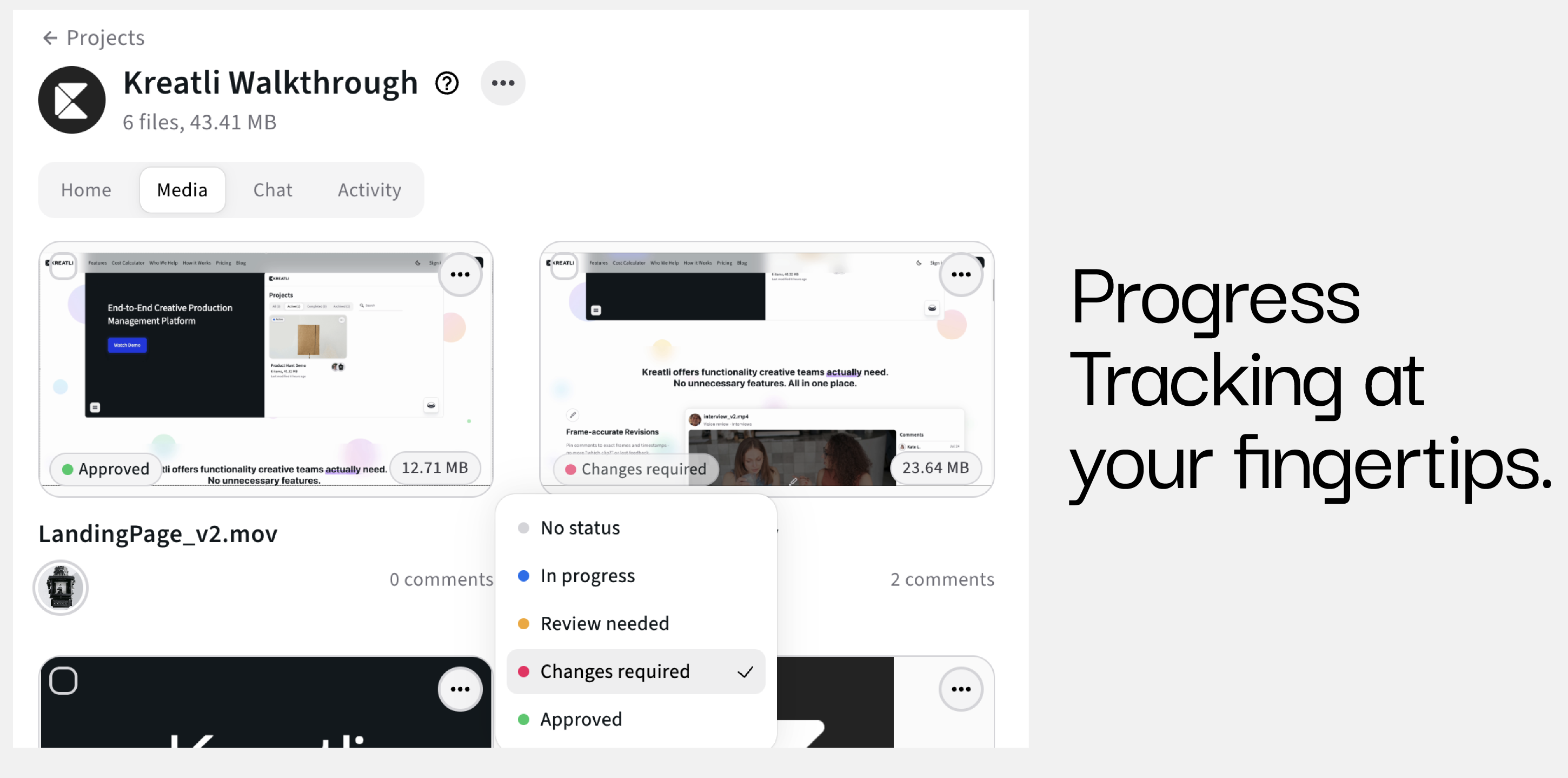
Track approvals independently
Kreatli supports this by allowing teams to manage Shorts alongside - but not merged with - other platform variants.
How Kreatli Helps Teams Ship Better YouTube Shorts
Kreatli is production management software built for creative teams operating across formats, tools, and platforms.
For YouTube Shorts, Kreatli enables teams to:
Keep Shorts-specific feedback centralized
Prevent “one-size-fits-all” approvals
Maintain consistency across growing libraries of short-form assets
Instead of retrofitting content after publishing issues arise, Shorts quality is enforced during production.
YouTube Shorts vs TikTok vs Instagram Reels
Each platform rewards different behavior:
YouTube Shorts → clarity, center framing, longevity
TikTok → aggressive UI avoidance, fast hooks
Instagram Reels → bottom-heavy UI, brand overlays
Safe zones must be handled per platform - not averaged.
For detailed guidance:
Frequently Asked Questions (FAQ)
What is the safe zone for YouTube Shorts?
The central vertical area of the frame where text and visuals are not covered by UI overlays.
Where should subtitles go on YouTube Shorts?
Centered or slightly above center for maximum readability and long-term visibility.
Can I reuse TikTok videos for YouTube Shorts?
Yes, but subtitles and framing usually need adjustment to avoid bottom clutter.
Are YouTube Shorts more forgiving than TikTok?
Yes - but only if content is clean, centered, and readable.
How do teams manage Shorts at scale?
By treating Shorts as a platform-specific deliverable within a structured production workflow.
Can Kreatli become your Production Management Platform?
Book a 30-minute workflow audit and we will map your current processes to the Kreatli production template.